
Block paving driveways
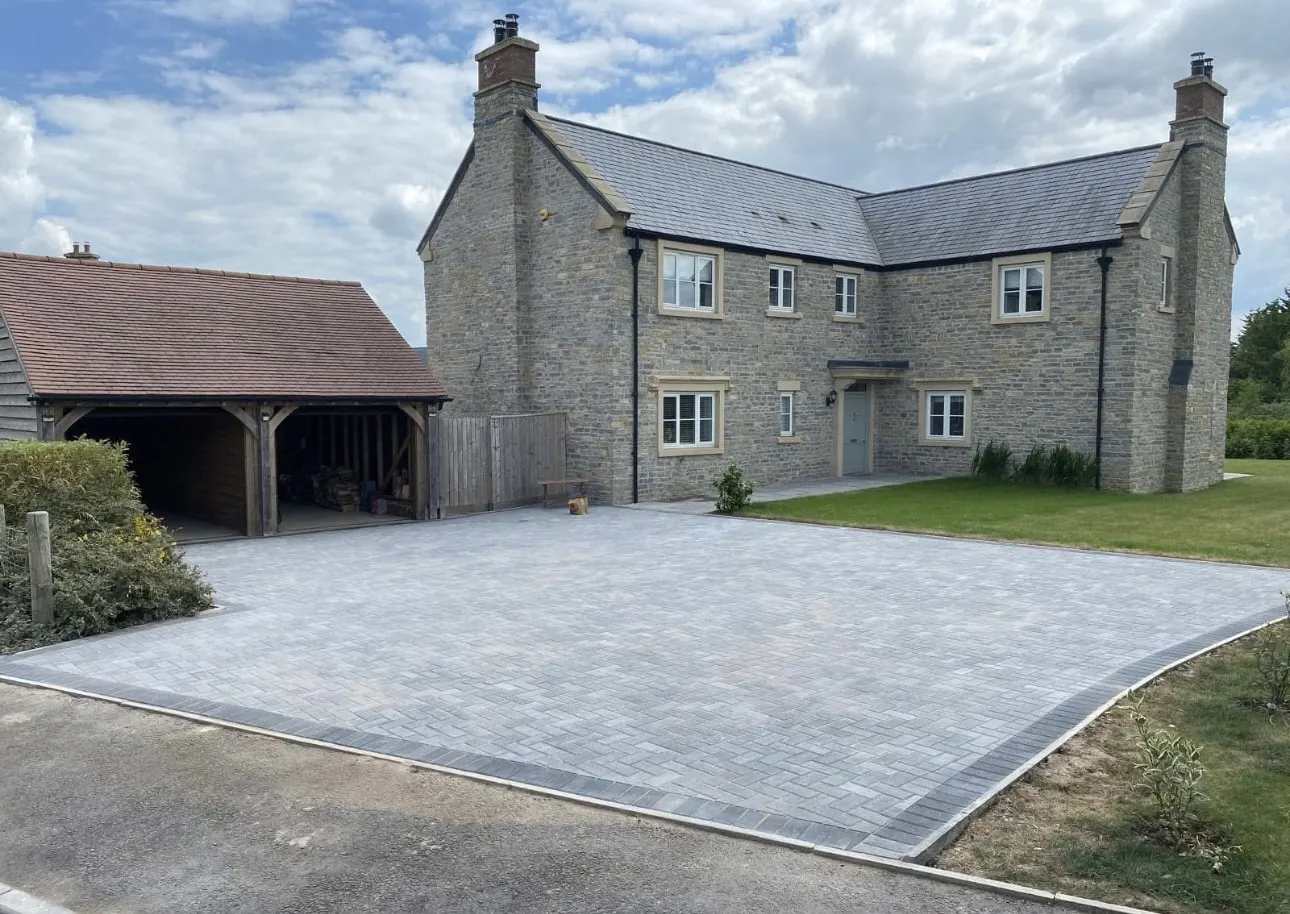
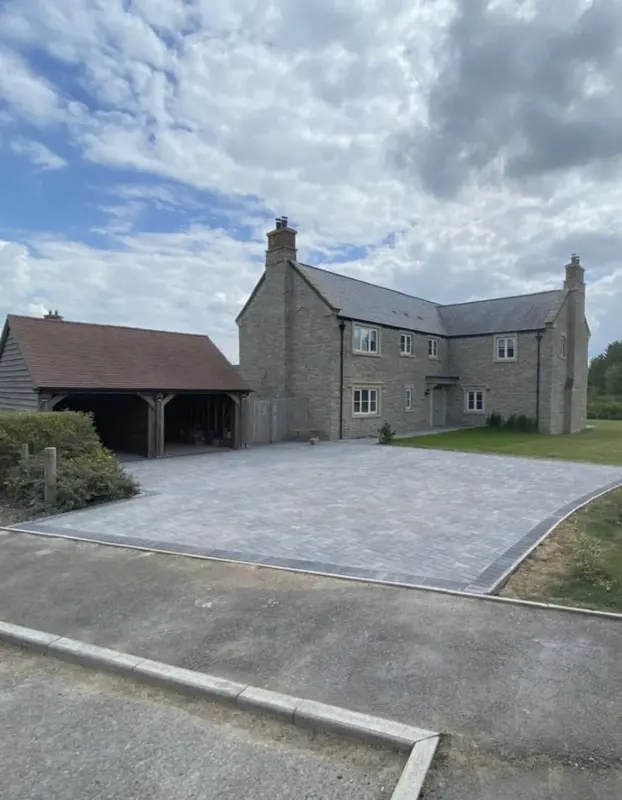
We lay block paving driveways, forecourts and paths in brindle, charcoal, grey and natural tones, with borders and curves cut to the shape of your plot. Each one sits on a compacted sub-base with edging set in concrete, so the blocks stay tight and level.
- Herringbone for strength under cars
- Borders, curves and inlays
- Permeable blocks available
- Repairs and relays too
- Free site visitMeasured and quoted in writing
- Fully insuredPublic liability cover on every job
- Itemised quotesEvery stage priced separately
- Bournemouth basedWorking across the south
Block paving we have laid
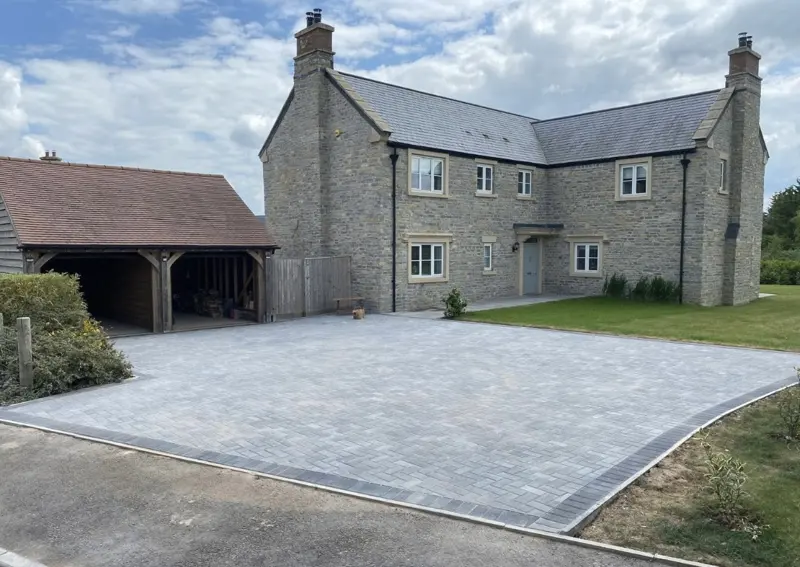
Brindle with a charcoal border is the most popular mix. Plain grey suits newer houses and render.
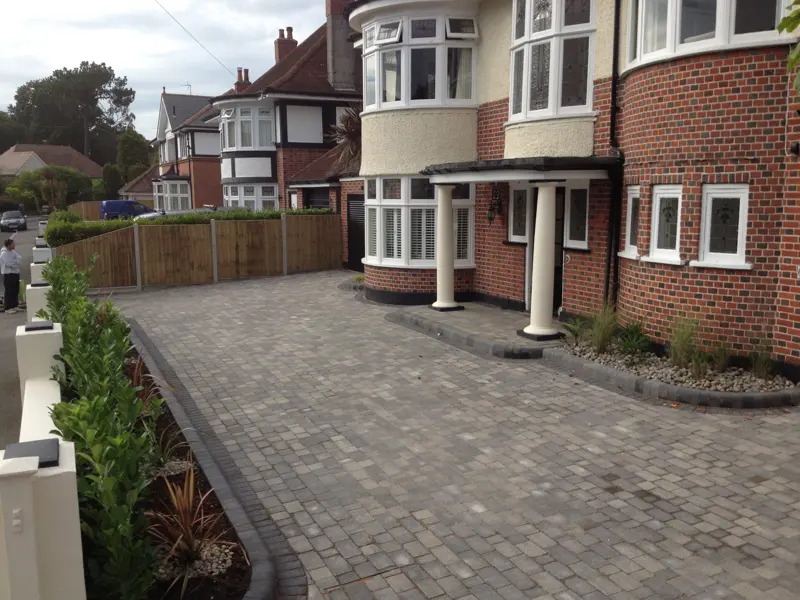
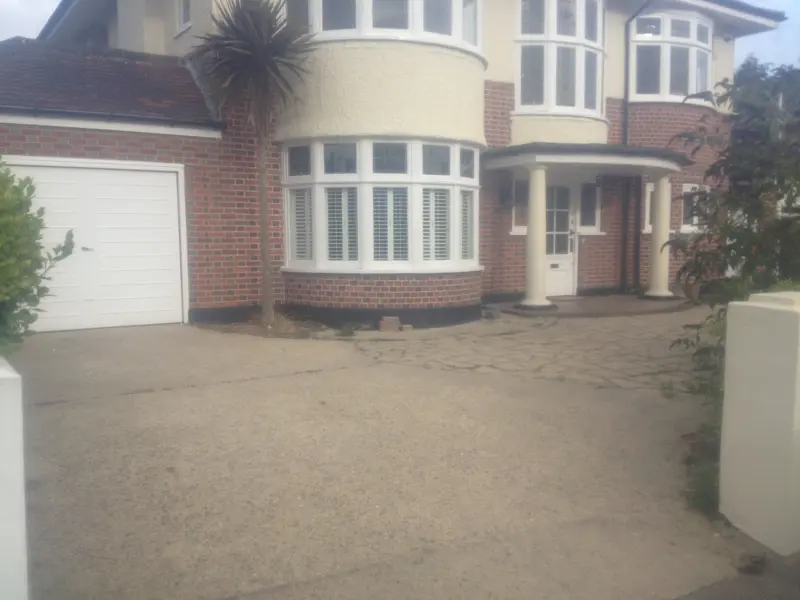 BeforeAfter
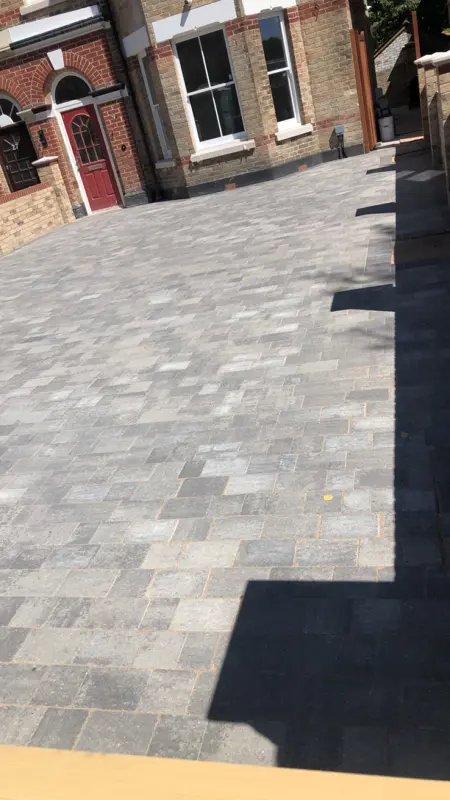
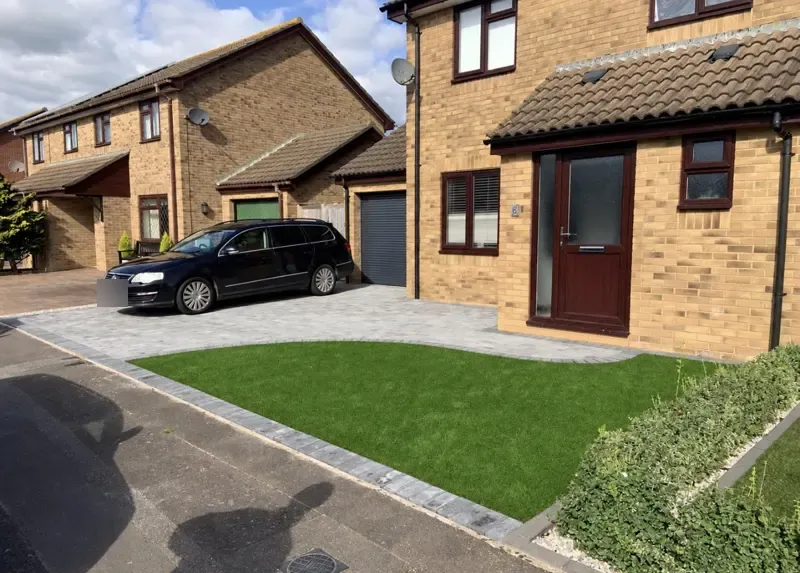
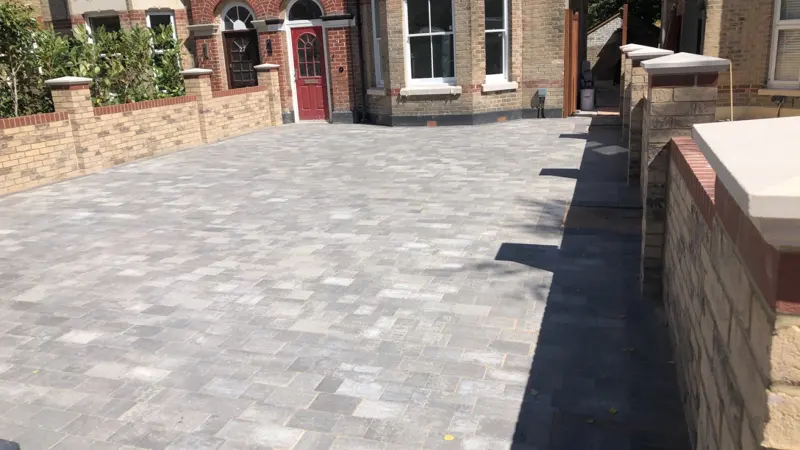
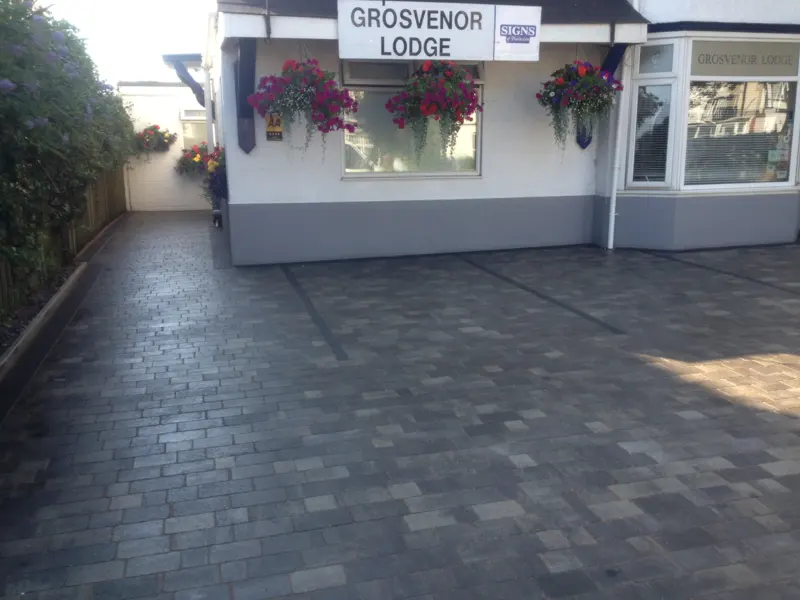
From a worn old drive to new grey paving
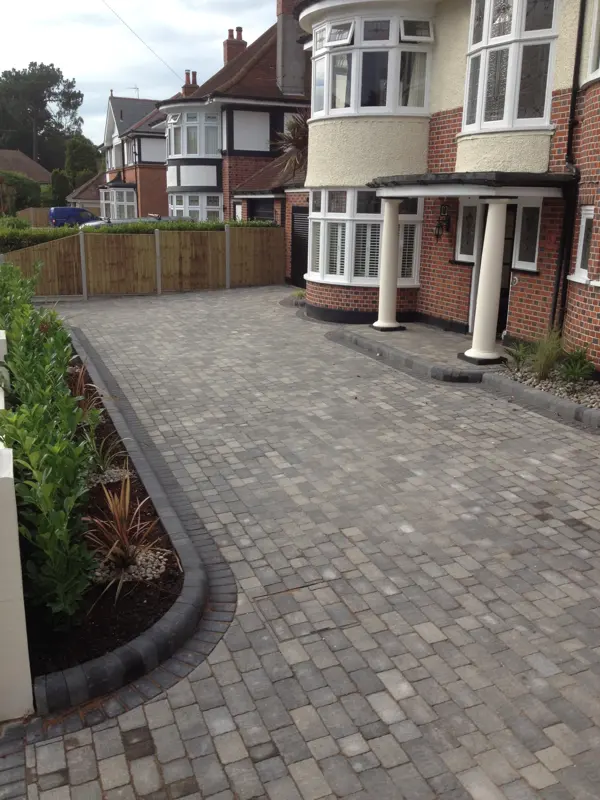
The old surface on this bay-fronted house had broken up and sunk. We took it out, dug down to firm ground, built a new sub-base and laid grey blocks with a curved charcoal edge that follows the front path round to the door.
Drag the slider to see the difference.
What goes under a block paved driveway
Block paving is a flexible surface. The blocks carry the weight together, held in by the edging and by the sand in the joints, and the sub-base spreads the load into the ground. If any one of those is skimped, the drive moves.
We follow the BS 7533 guidance for how the layers go together:
- Dig out to firm ground, deeper where the soil is soft or clay, with a membrane laid where needed.
- Sub-base laid in layers and compacted with a plate or roller after each one.
- Edge restraint: kerbs or edging blocks set in concrete on every open edge. Without it, the paving spreads and the joints open.
- Bedding layer of sharp sand screeded level, with falls built in so water runs away from the house.
- Blocks laid in your pattern, cut to fit, then compacted and the joints filled with kiln-dried sand.
Permeable block paving
If water cannot run off into a lawn or border, we can lay permeable blocks. They have wider joints filled with grit and a sub-base that holds and releases rainwater into the ground, which keeps a large front drive within the planning rules. Read more in our planning permission guide.
Prefer a smooth finish with no joints? See resin bound driveways. Want block paving round a patio or path? We do those as part of our garden landscaping.
Patterns, colours and borders
The same blocks can look plain or grand depending on how they're laid. These are the choices we talk through at the visit.
Herringbone and other patterns
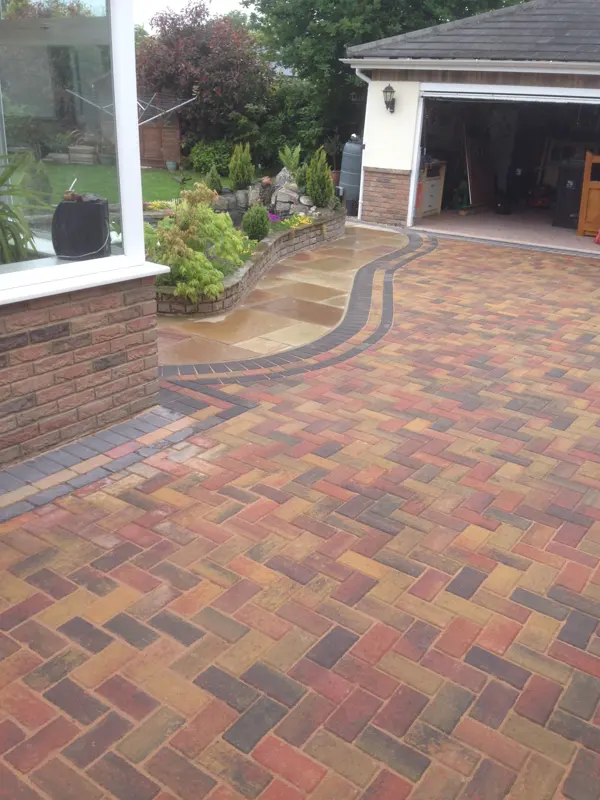
Herringbone is our default for driveways: the blocks lock together in two directions, so turning tyres can't push them apart. Basketweave and stretcher bond look good on paths and patios but move more under cars, so we keep them off the parking area.
- 45° or 90° herringbone
- Basketweave for paths
- Stretcher bond for edges
- Pattern changes at a border
Colours and borders
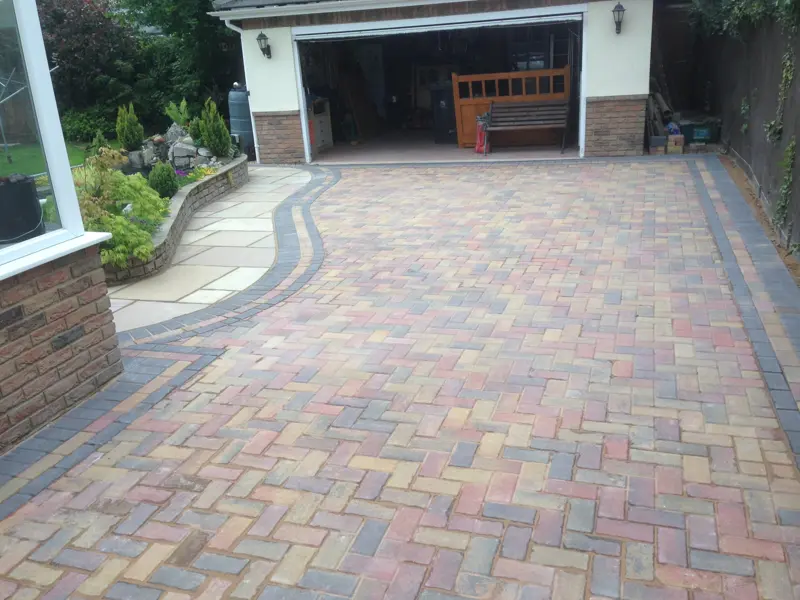
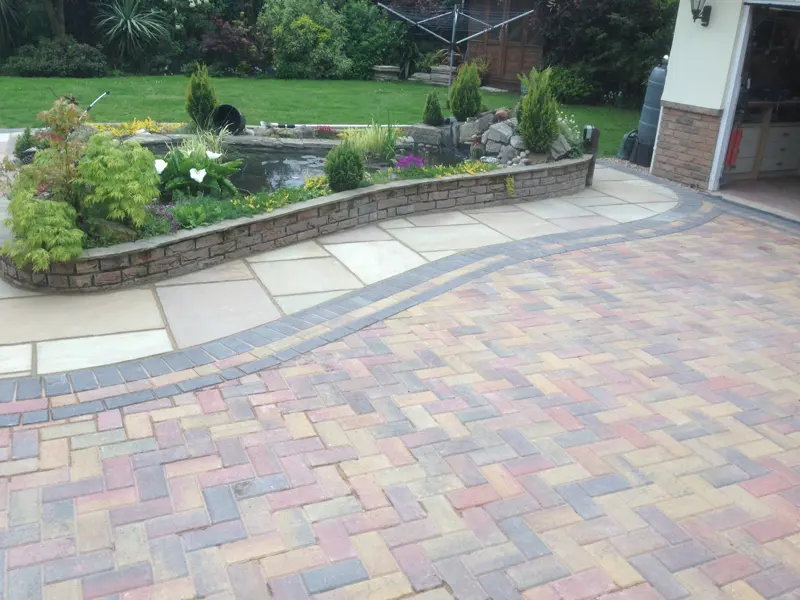
Brindle mixes reds and browns and suits brick houses. Charcoal and grey suit render and newer builds, and tumbled tegula-style blocks give an aged look for cottages. A border in a contrasting colour frames the drive and hides the cut blocks along the edges.
- Brindle, charcoal, grey, natural
- Tumbled tegula-style blocks
- Contrasting border
- Matched to the house
Curves and inlays
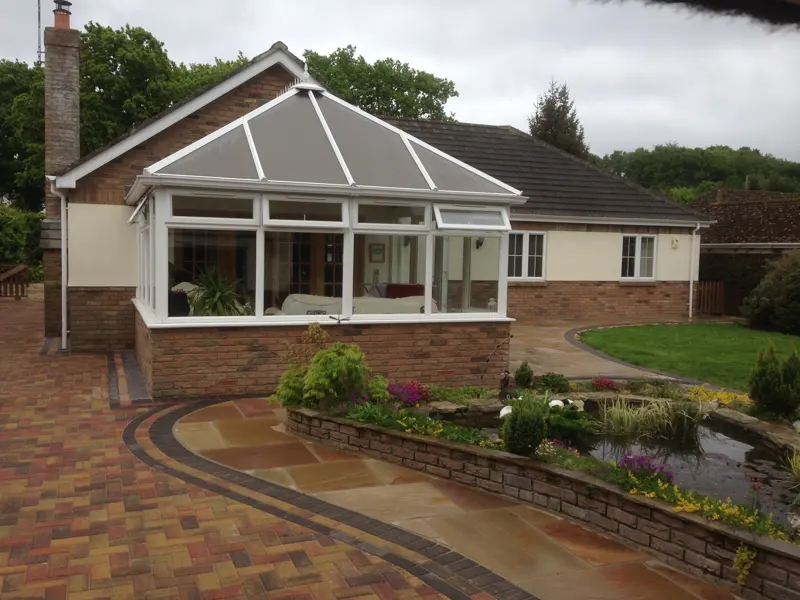
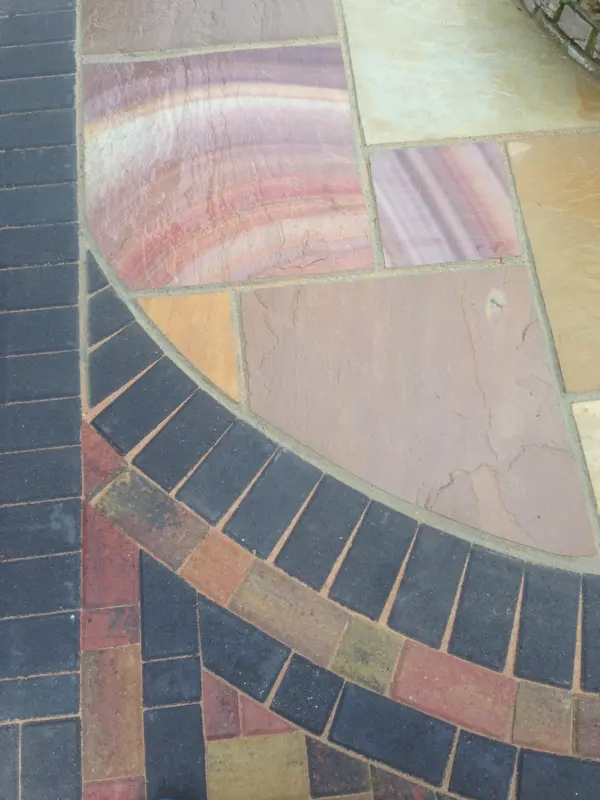
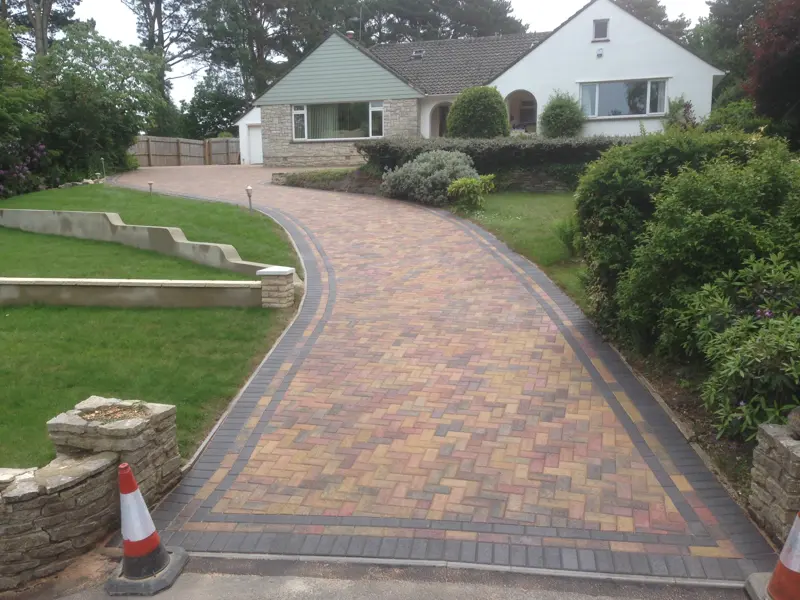
Drives rarely need to be rectangles. We cut borders round flower beds, ponds and lawns, and set circles or bands of sandstone and charcoal into the paving. Every curve is cut block by block on site.
- Curves round beds and lawns
- Sandstone and charcoal circles
- Bands across the entrance
- Cut on site to fit
Forecourts and courtyards for businesses
We also lay block paving for guest houses, shops and small businesses, where the forecourt has to look smart and take daily traffic. See our commercial work.
Relaying blocks
Lifting sunken blocks, putting the bedding right and laying them back. The van is ours.
Block paving on different ground
The pattern does not change with the town. The base does. Sand around Bournemouth and Poole needs a solid haunch on the edging. Chalk around Salisbury, Winchester and Basingstoke is firm once you reach it, and slow to dig where there is flint. Clay along the coast needs deeper excavation and a way for water to leave the drive.
Herringbone is still the pattern we lay under cars, in every one of those towns.
Block paving questions
How much does a block paving driveway cost?
Do I need planning permission for block paving?
Which laying pattern is strongest for a driveway?
Can you repair or relay old block paving?
How do I stop weeds in block paving?
Get a block paving quote
We will measure up, bring block samples and send a written quote with the dig out, base, edging and paving priced separately.