
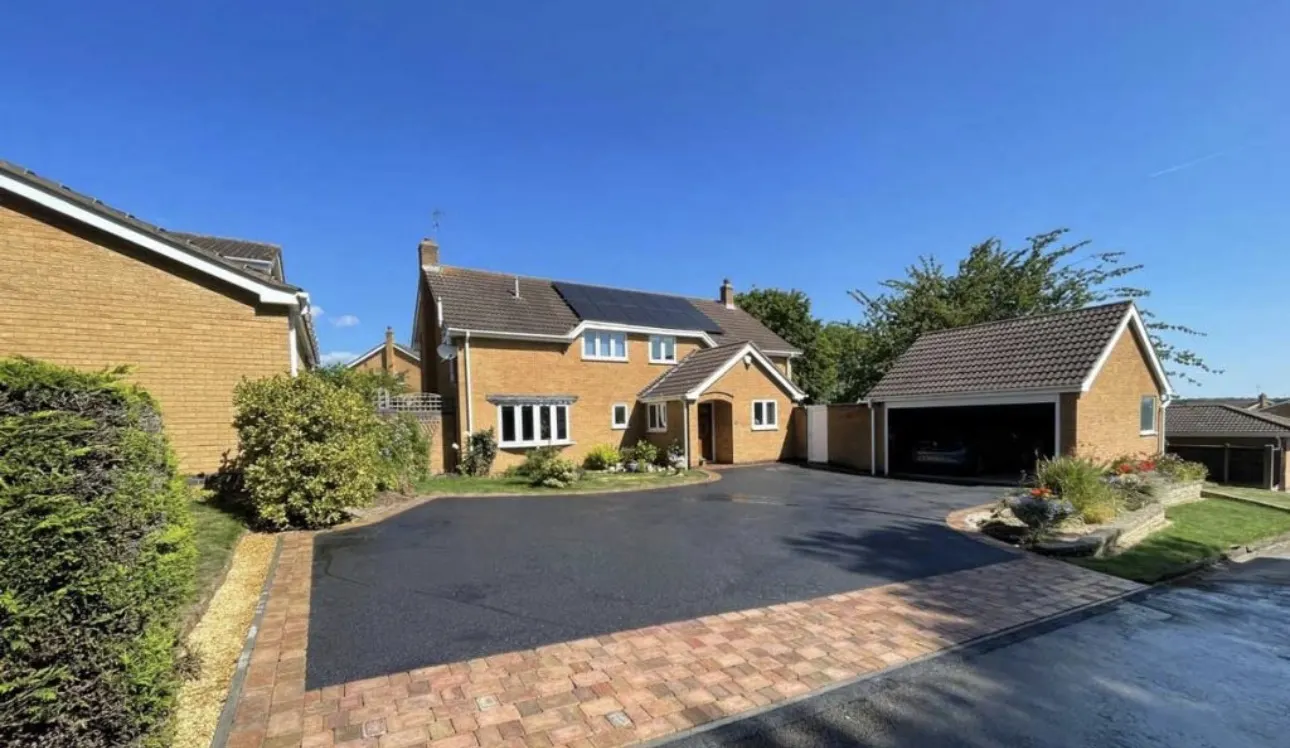
Tarmac driveways
Tarmac is the hard-wearing, lower-cost way to surface a driveway, especially a long or wide one. We lay it hot over a compacted sub-base and usually finish it with a block paving edge or apron, so it looks tidy and the edges do not crumble.
- Lower cost per m² on big areas
- Block paving edges and aprons
- Drainage designed in
- Driveable in a day or two
- Free site visitMeasured and quoted in writing
- Fully insuredPublic liability cover on every job
- Itemised quotesEvery stage priced separately
- Bournemouth basedWorking across the south
Who we suggest tarmac to
Tarmac is a good fit when the drive is long, wide or takes heavy use: farm tracks, shared access, houses with several cars, or a drive that vans turn on. It costs less per m² than resin or block paving, and it copes well with turning tyres.
It is a plain finish. A block paved border, apron at the road or a band across the entrance lifts it, and that is how most of ours are finished.
- Sub-base dug out and compacted, the same as any other drive
- Laid hot and rolled to a smooth, even surface
- Falls to a channel drain, border or soakaway
- Block edging to hold and finish the edges
Comparing options? See resin bound for a decorative finish that drains, or gravel if budget comes first.
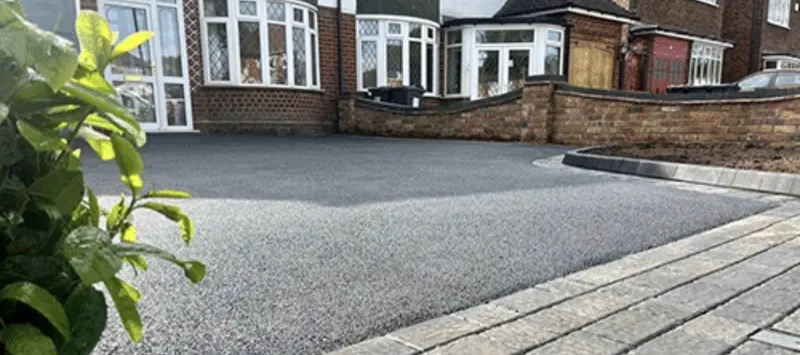
Tarmac drives with a block apron
A block-paved apron at the road keeps the edge from crumbling and stops the drive looking like a plain black slab.
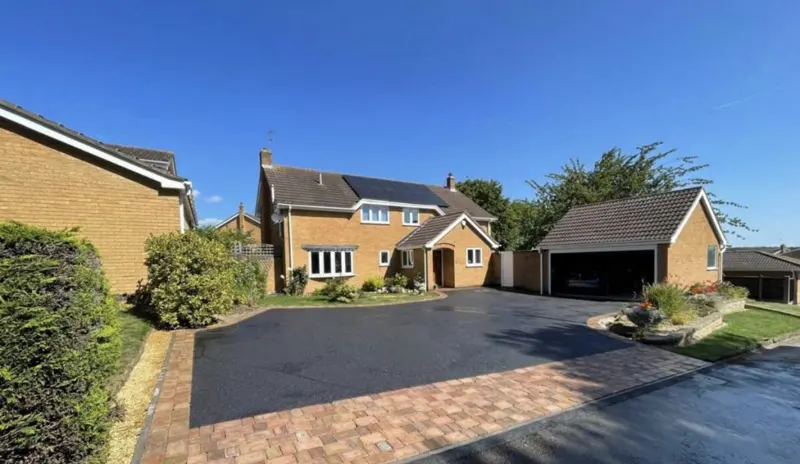
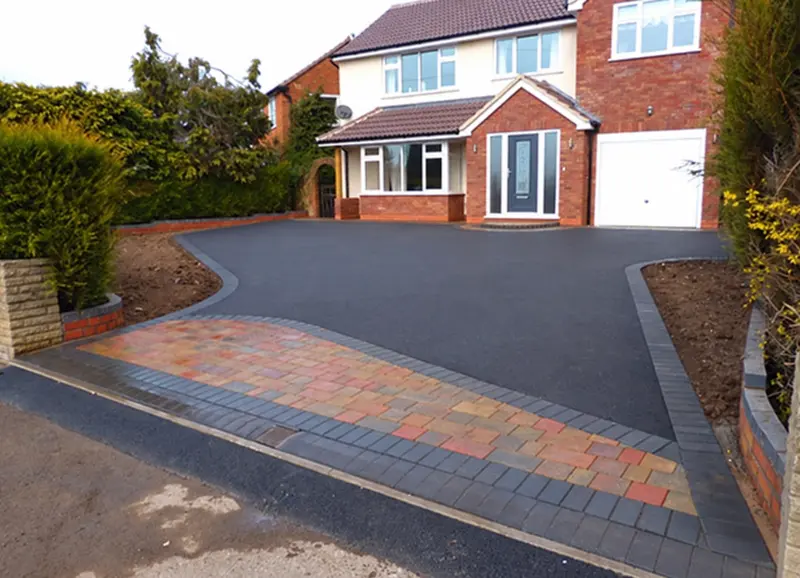
How a tarmac drive is laid
- Break out and dig. The old surface comes up and we dig down to firm ground, deeper on clay.
- Edging first. Block or kerb edging is set in concrete, so the tarmac has something solid to be rolled against.
- Sub-base. Type 1 laid and compacted in layers, with the falls built into it.
- Base course. A coarse binder layer, laid hot and rolled. This does the structural work.
- Surface course. A finer layer on top, rolled smooth and sealed at the joints and edges.
You can usually walk on it the same day and drive on it after a day or two. For the first summer, avoid turning the wheel while the car is standing still, and don't park on stands or sharp feet in hot weather, because new tarmac is still slightly soft.
Black, red, or resin on top
Black is standard. Red tarmac costs more and is mostly used for a contrasting strip or on older properties. If you like the look of resin but the tarmac underneath is sound and level, a resin bound layer can go straight over it, which saves digging out. Cracked or sunken tarmac has to come up first.
Tarmac for car parks and yards
We also lay and repair tarmac for small car parks, yards and private roads, with the drainage to suit. See commercial surfacing for how we work with businesses.
Commercial workTarmac driveway questions
How much does a tarmac driveway cost?
Does a tarmac driveway need planning permission?
How soon can I drive on new tarmac?
Can you edge tarmac with block paving?
Get a tarmac driveway quote
Book a free site visit. We measure up, talk through materials and send you a written, itemised quote.