
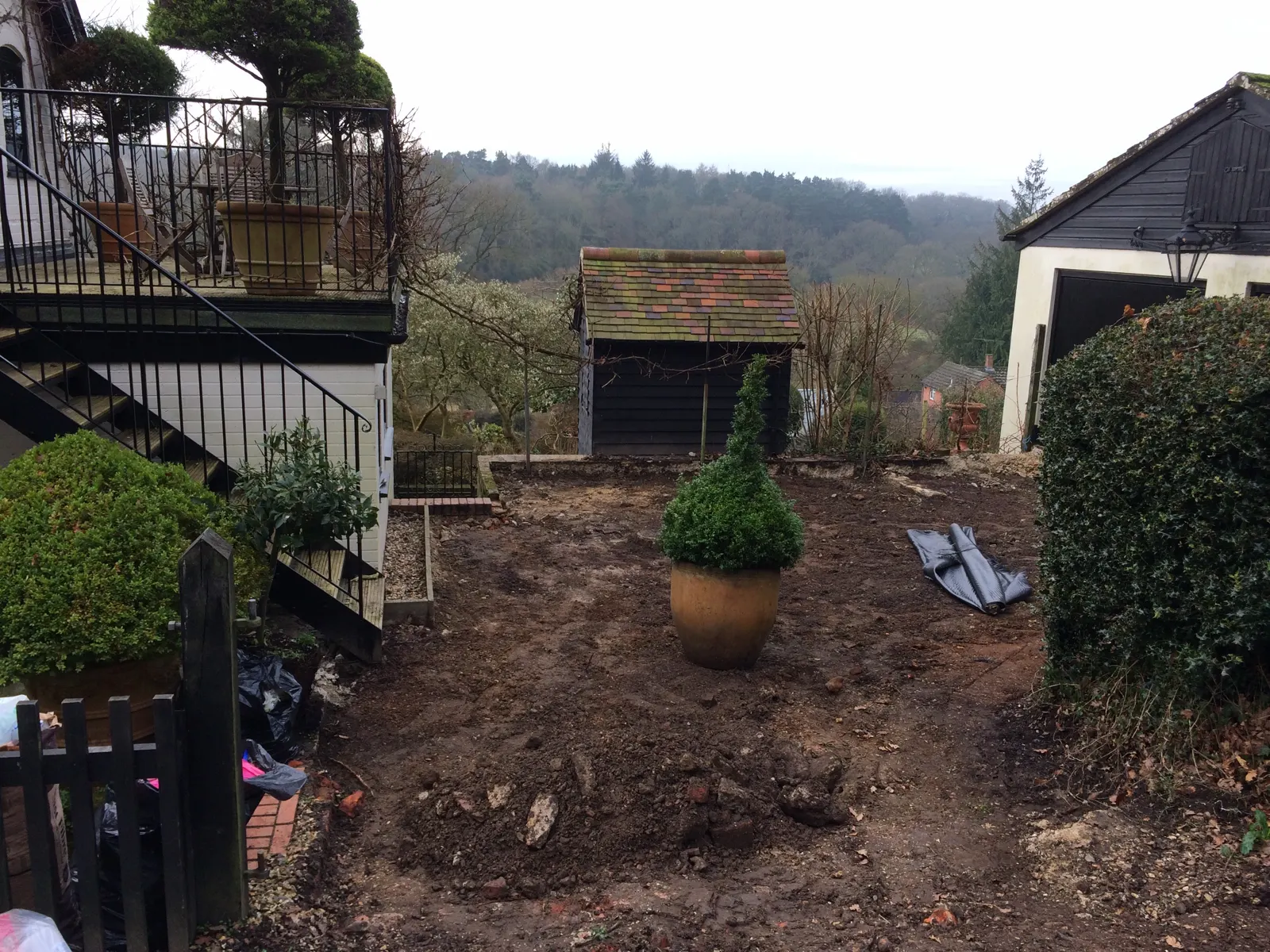
Groundworks, excavation and drainage
Groundworks are the part of a job you never see once it is finished: clearing the site, digging out, building the sub-base, pouring footings and sorting the drainage. We do it for our own driveways and gardens, and for homeowners and builders who need the ground ready.
- Free site visitMeasured and quoted in writing
- Fully insuredPublic liability cover on every job
- Itemised quotesEvery stage priced separately
- Bournemouth basedWorking across the south
Groundwork we take on
Everything below the finished surface. We do it on our own jobs, and for homeowners and builders who need the ground ready.
Clearance, excavation and muck away
Old outbuildings, roots, rubble and overgrowth cleared with a mini digger, then the dig for driveways, patios, footings and garden rooms. Spoil and waste go by grab lorry or skip, and the muck away is its own line on the quote, because on chalk and flint it can be a big one.
- Site clearance and old buildings
- Dig outs to firm ground
- Grab lorry or skip
- Muck away priced separately
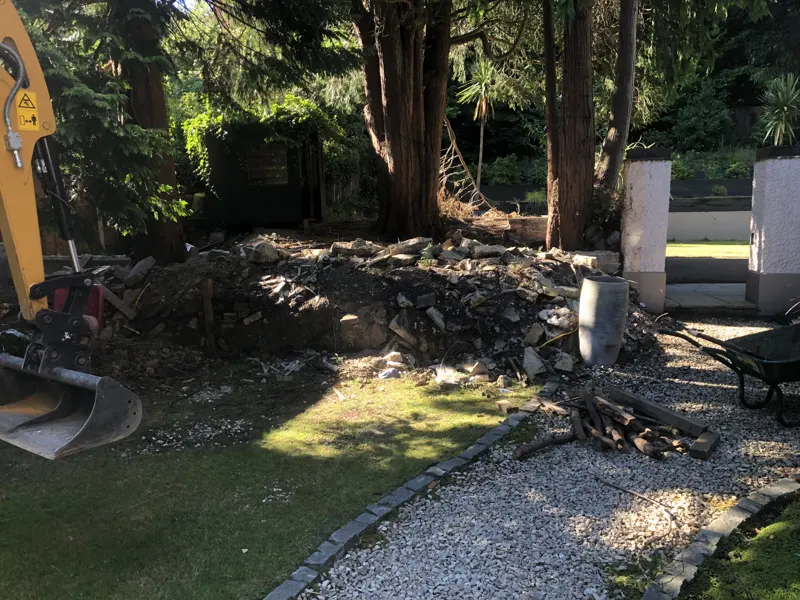
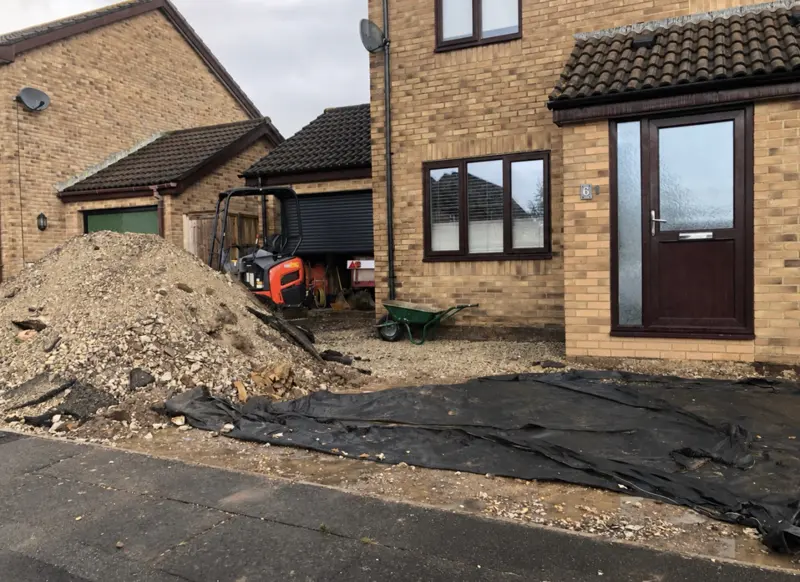
Sub-bases, footings and concrete bases
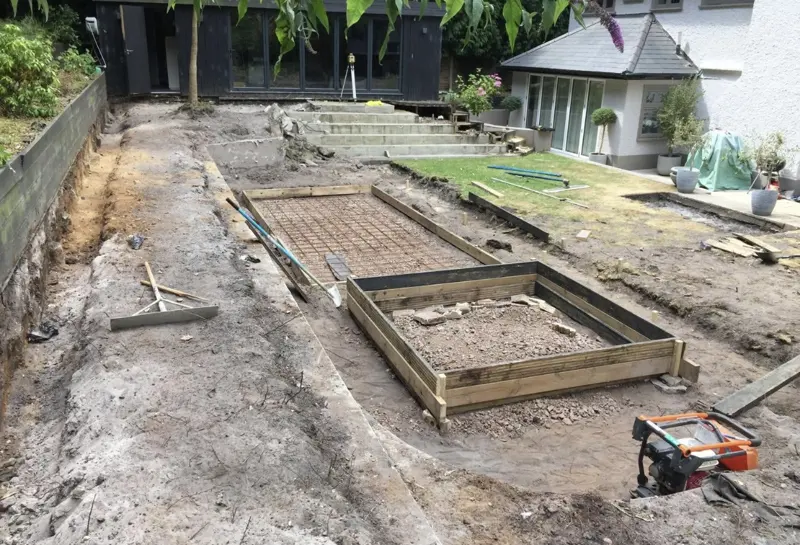
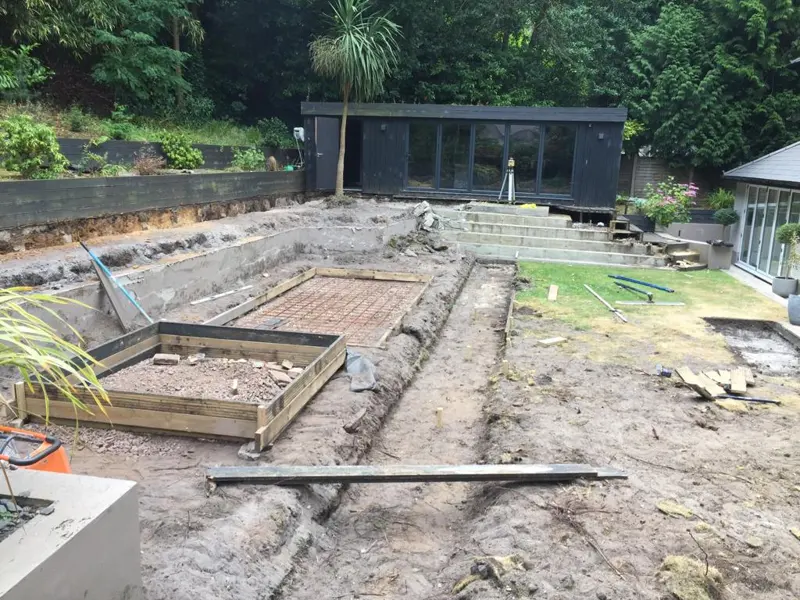
Type 1 sub-base laid and compacted in layers, ready for any surface. Strip and pad footings for walls and pillars, dug to the depth the ground needs rather than the minimum, and steel-reinforced slabs for garden rooms and outbuildings. Where footings need inspecting, we book building control in at the right stage.
- Type 1 compacted in layers
- Strip and pad footings
- Reinforced slabs and plinths
- Building control booked in
Levels, terraces and access
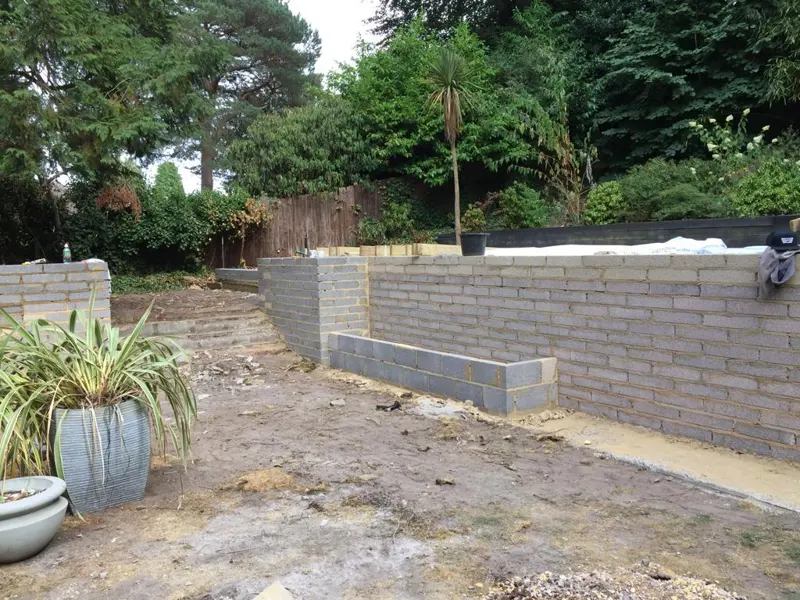
Level reductions, cut and fill on sloping plots, and terraces dug out ready for retaining walls. Access roads and tracks dug out and built up with sub-base, ready for tarmac, block or gravel. Every new hard surface needs somewhere for the rain to go, so the drainage is planned at the same time.
- Level reductions, cut and fill
- Terraces ready for walls
- Access roads and tracks
- Drainage planned in
Drainage sized for your ground, not guessed
Most sinking patios, cracked walls and flooded drives come back to water. New hard surfaces send rain somewhere, and if it isn't planned it ends up against the house or on the neighbour's side.
On a driveway or patio we set falls to a linear channel drain across the opening, or let it run to a border. Wet lawns and slopes get a French drain: a gravel-filled trench with a perforated pipe that carries water away. Where there is no drain to connect to, water goes to a soakaway, a buried crate or rubble pit that lets it soak back into the ground.
A soakaway only works if the ground can take the water. On clay it often can't. So before we size one, we dig a test hole, fill it and time how fast it drains (a percolation test). On the free-draining sand around Poole and Bournemouth a small soakaway does the job. On the clay found in pockets across Dorset and Hampshire it needs to be much bigger, or the water has to go to a drain instead.
Surface water and the house's foul drains are kept apart, which is what building control and the water company expect.
Why the dig is usually the long part
The surface is what you see. The time goes into getting down to firm ground, taking the spoil away and building the base back up in layers. On sand, around Poole and Bournemouth, the dig is quick and the edging has to hold the sides. On chalk, through Dorset and Hampshire, flint slows the excavator and there is more spoil. On clay, along the coast and in parts of West Sussex, we dig deeper so the base does not sit in water.
A groundworks quote splits that out: site clearance, how deep we dig, the sub-base, any concrete base or footing, drainage or a soakaway, and muck away. Each one is its own line, the same as on a driveway or patio quote. If you only need the ground prepared for someone else to finish, say so and we will price that on its own.
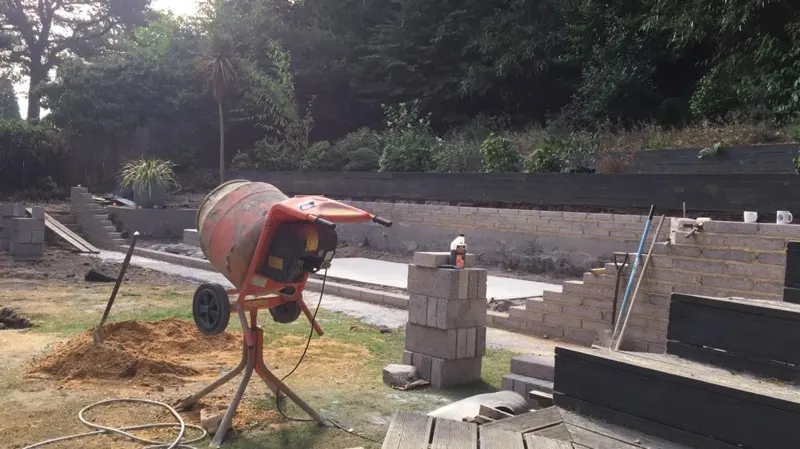
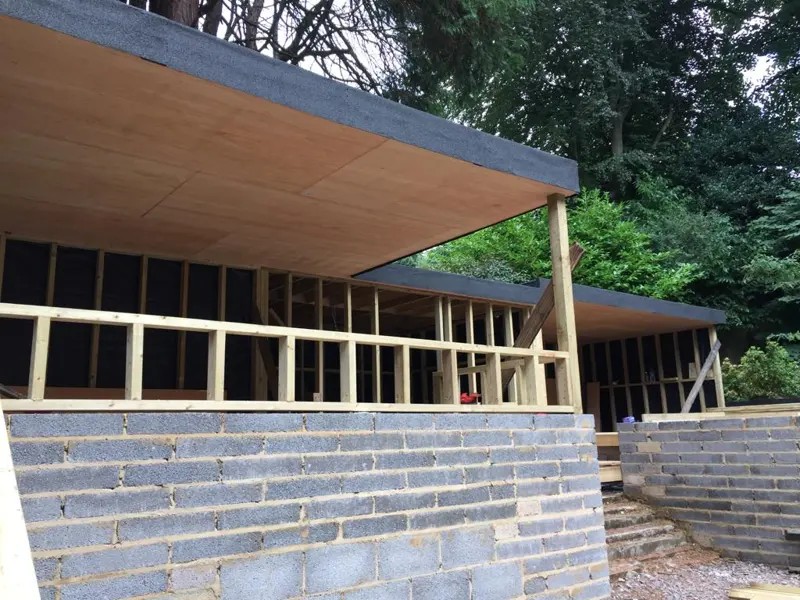
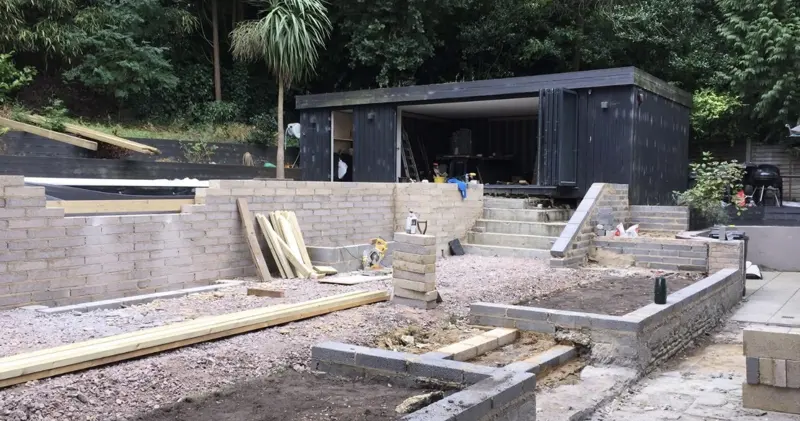
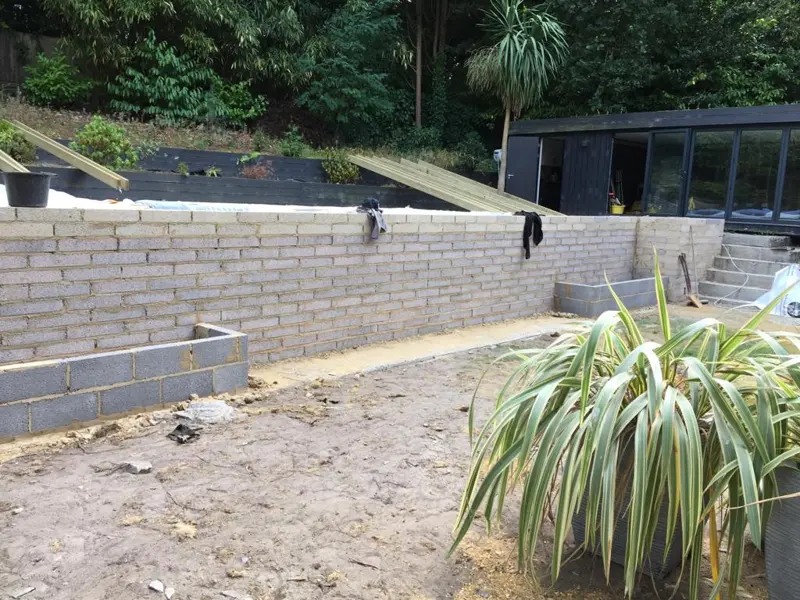
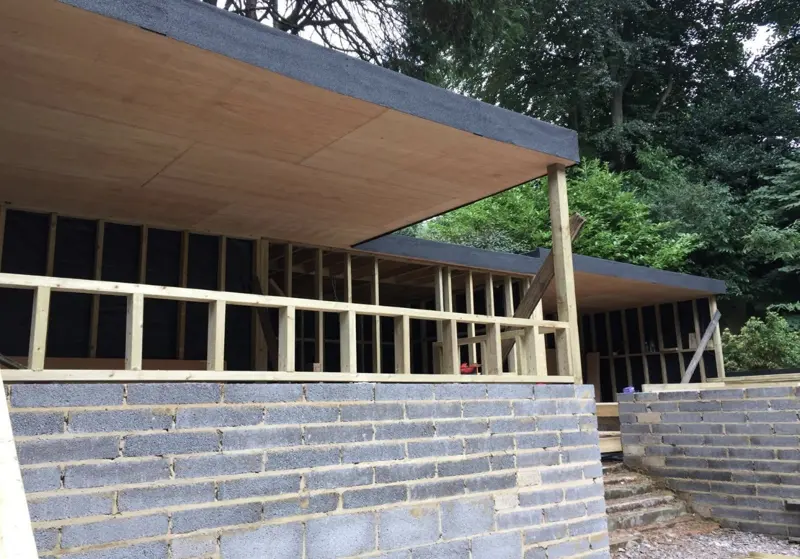
Groundworks in progress
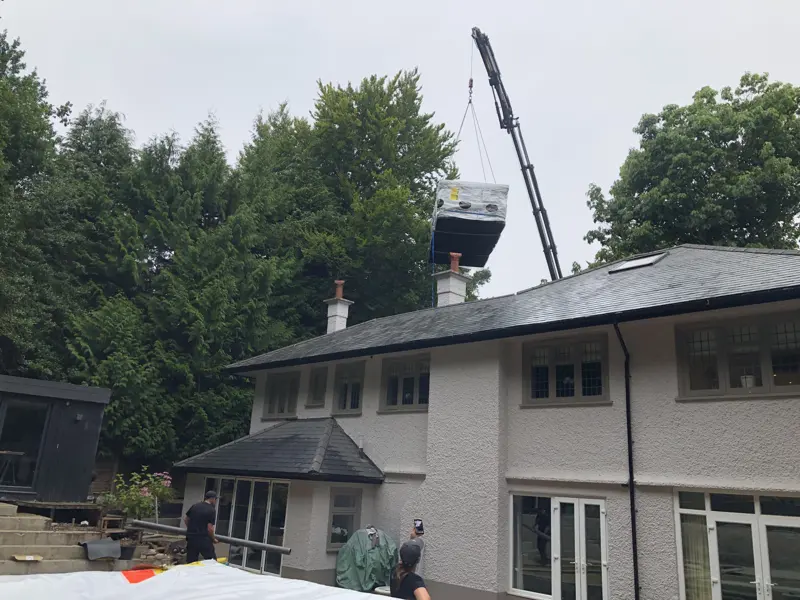
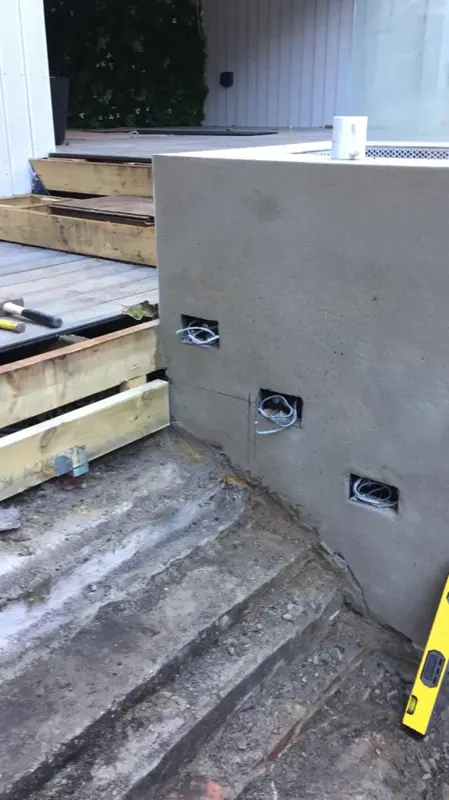
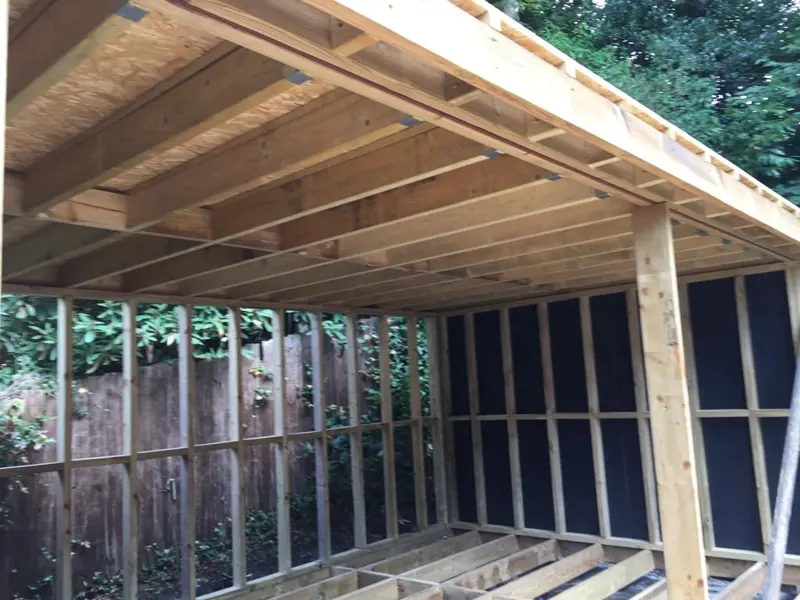
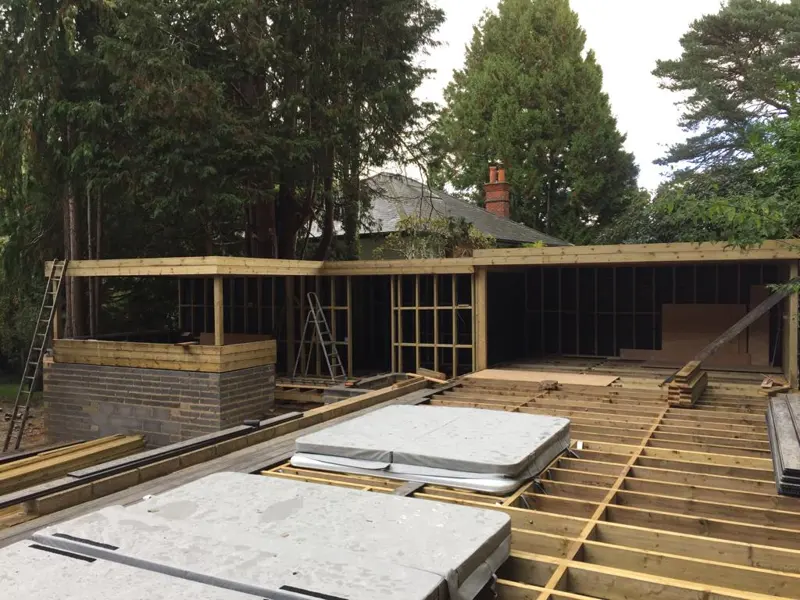
What happens once the groundwork is done: walls, steps, decks and garden rooms going up on it.
Groundworks questions
Do you do groundworks on their own, without the surfacing?
What is a soakaway and do I need one?
Can you get a digger into my garden?
Need the ground prepared?
Book a free site visit. We measure up, talk through materials and send you a written, itemised quote.