
Driveway installers for resin, block paving, tarmac and gravel
We lay new driveways across Dorset, Hampshire, south Wiltshire and West Sussex, from small front drives to long sweeping ones. Every drive goes down on a dug-out, compacted sub-base with edging that holds it in place.
- Free visit, levels checked
- Itemised written quote
- Old drive removed and taken away
- Permeable options, no planning
- Free site visitMeasured and quoted in writing
- Fully insuredPublic liability cover on every job
- Itemised quotesEvery stage priced separately
- Bournemouth basedWorking across the south
Four driveway surfaces we lay
Most people come to us with one in mind and some change their minds after the visit. Here is what each one is like to live with.
Resin bound driveways
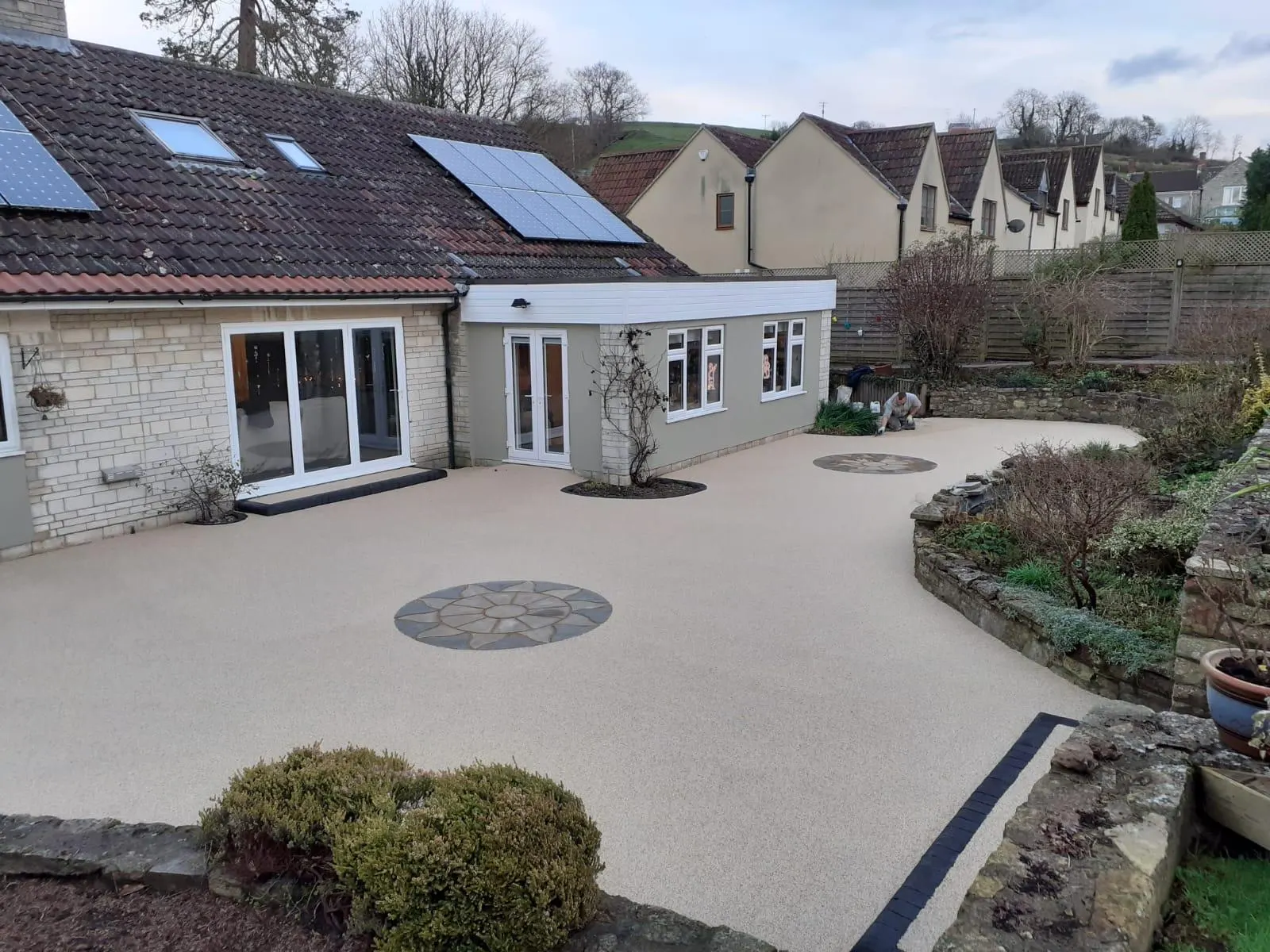
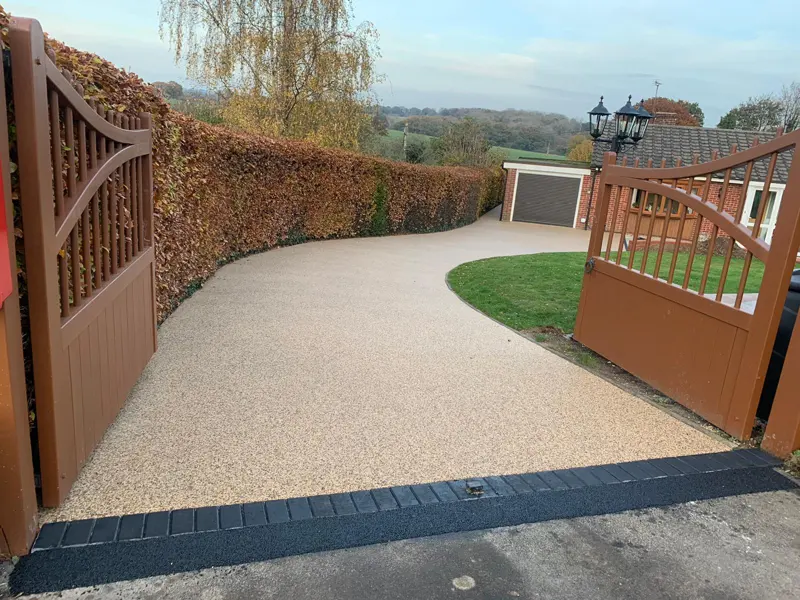
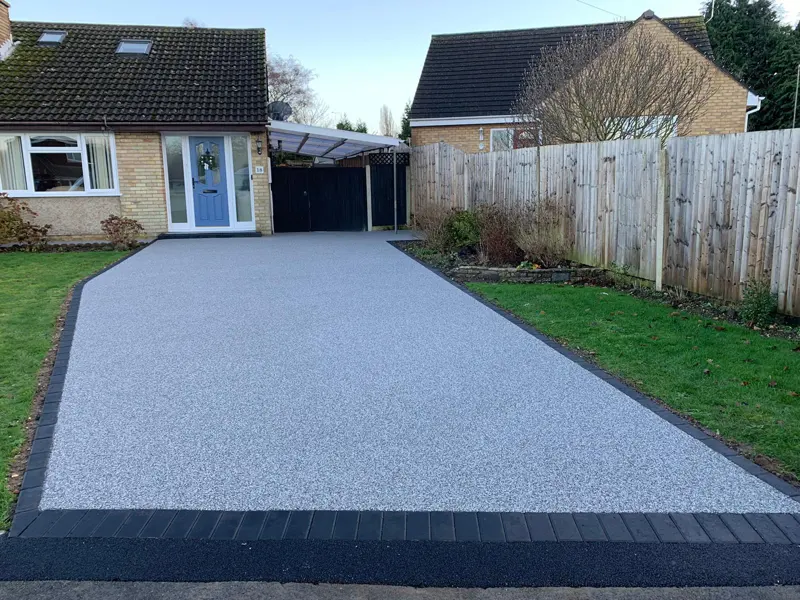
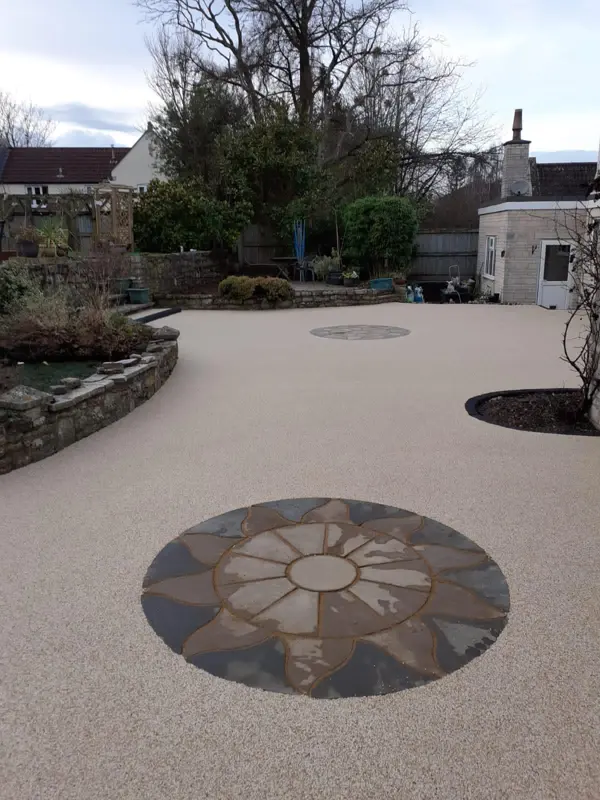
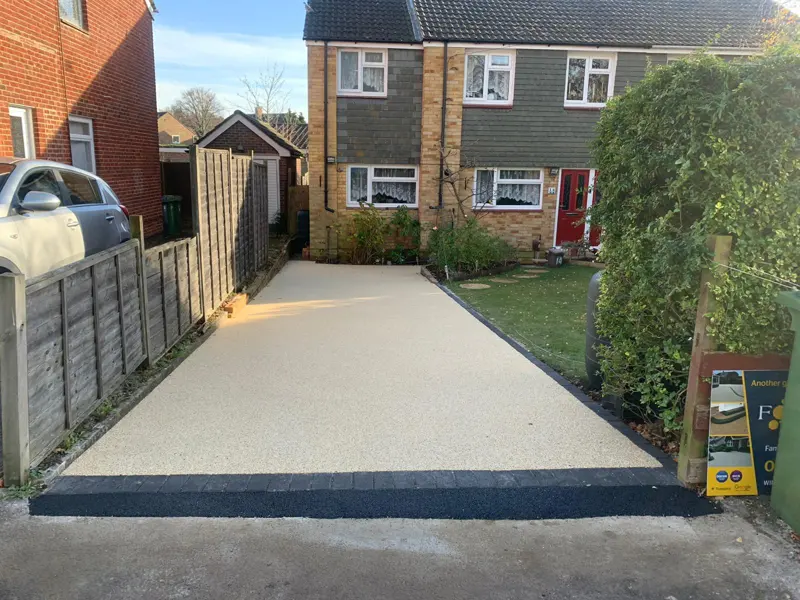
Natural stone mixed with clear resin and trowelled smooth over a sound base. Rain soaks straight through, so a resin drive meets the front garden drainage rule without a planning application, and there are no joints for weeds. Pale and warm blends brighten a brick house; silvers and greys suit render. Curves, borders and round inlays are easy to form.
- Permeable, no planning needed
- No weeds, no loose stones
- UV-stable resin keeps its colour
- A jet wash once or twice a year
Block paving
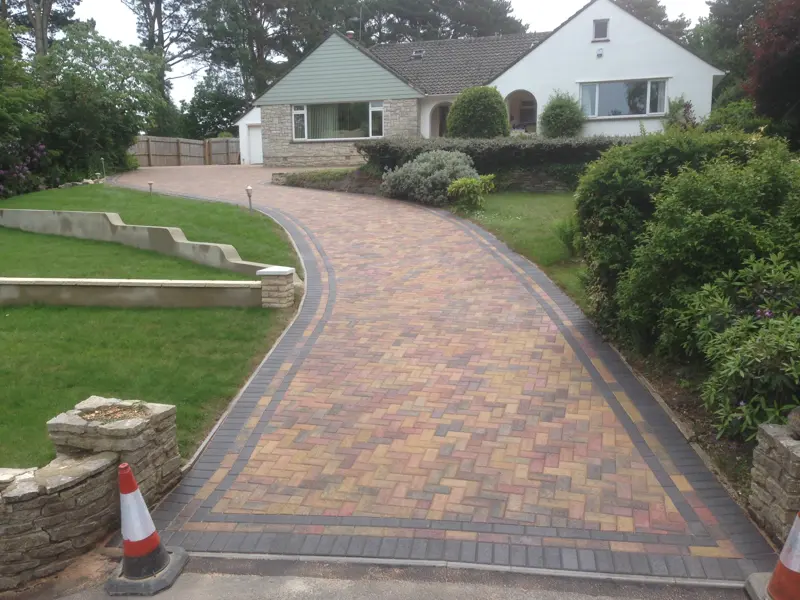
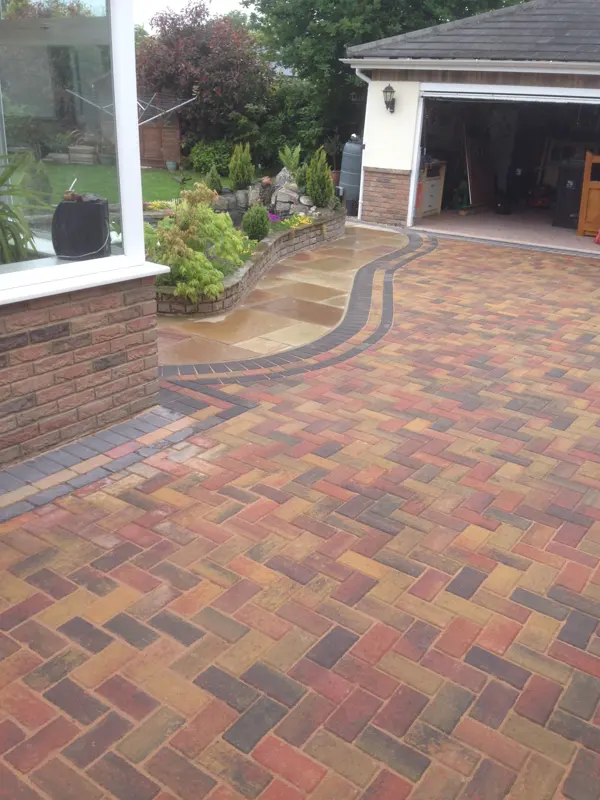
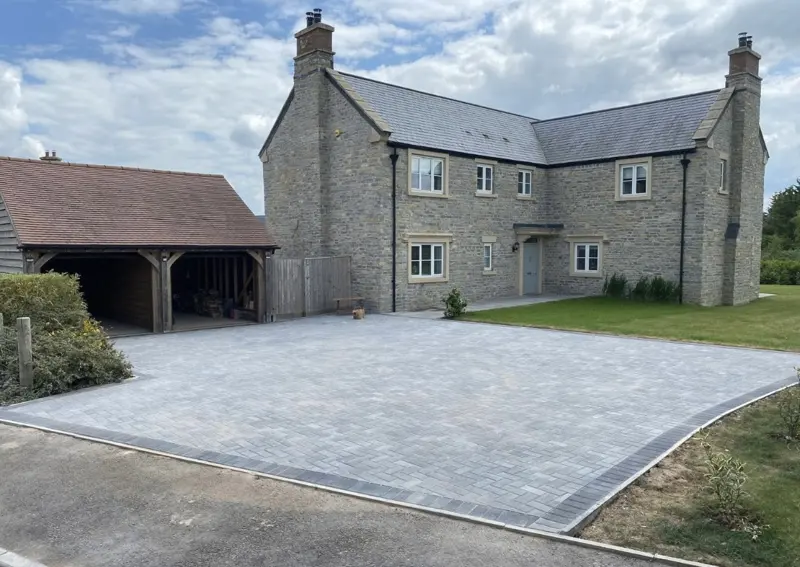
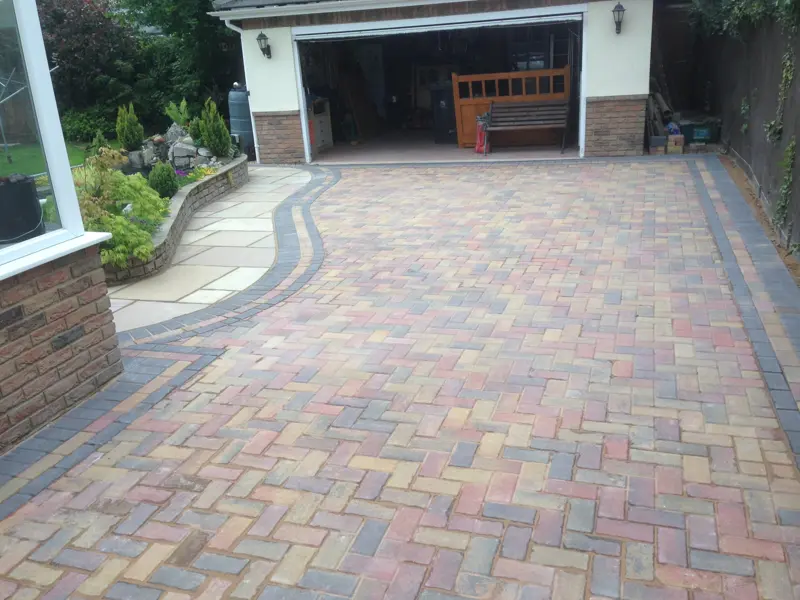
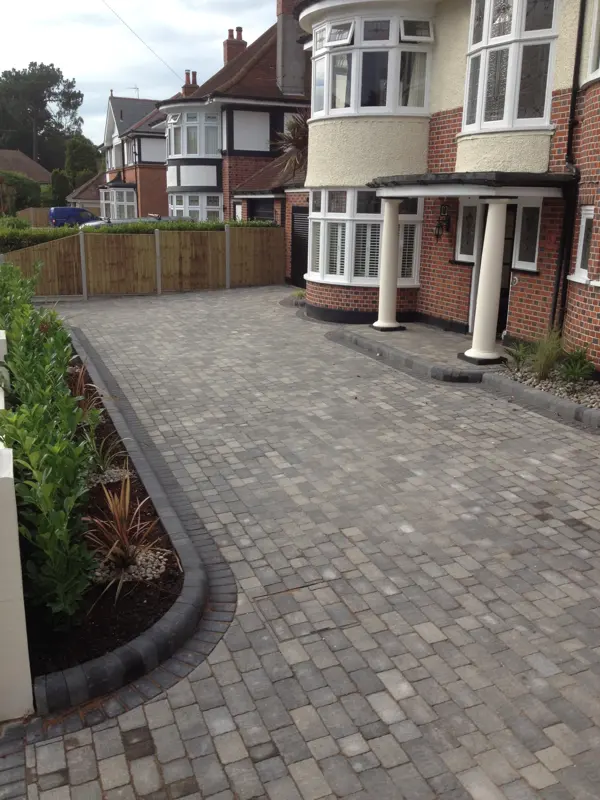
Concrete blocks in brindle, charcoal, grey or tumbled tegula styles, laid in herringbone, basketweave or stretcher bond. Borders, curves and inlays in a second colour frame the drive. Because each block is separate, a sunken patch or a dug-up cable run can be lifted and relaid without a scar. Permeable blocks are available where the drive needs to drain.
- Herringbone, basketweave, borders
- Lift and relay one area
- Permeable blocks if needed
- Kiln-dried sand topped up yearly
Tarmac driveways
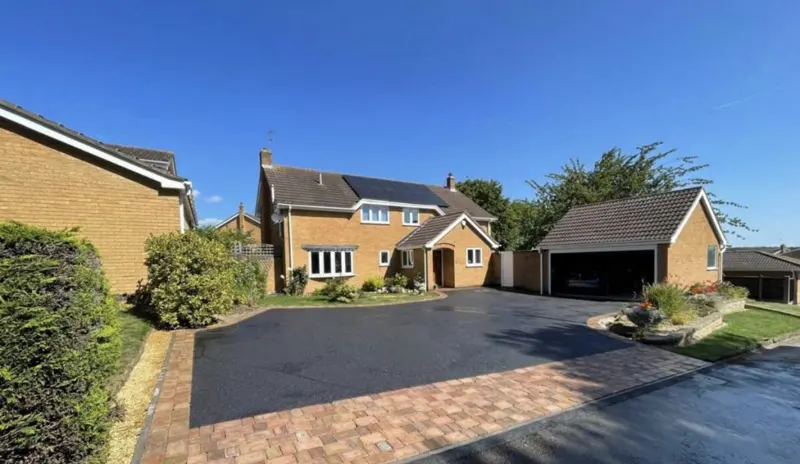
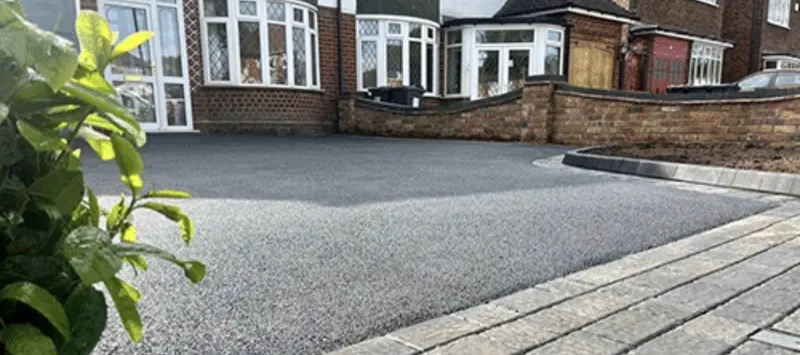
Hot tarmac laid in a base and a surface course, then rolled. It is the toughest surface for the money, which is why it suits long drives, shared accesses and anywhere vans turn. A block paving apron at the road or a brick edge either side takes it from plain to smart. Tarmac is not permeable, so falls and a drain or soakaway go in with it.
- Lowest cost per m² of the hard surfaces
- Copes with heavy vehicles
- Block apron or edging to finish
- Needs falls and a drain
Gravel driveways
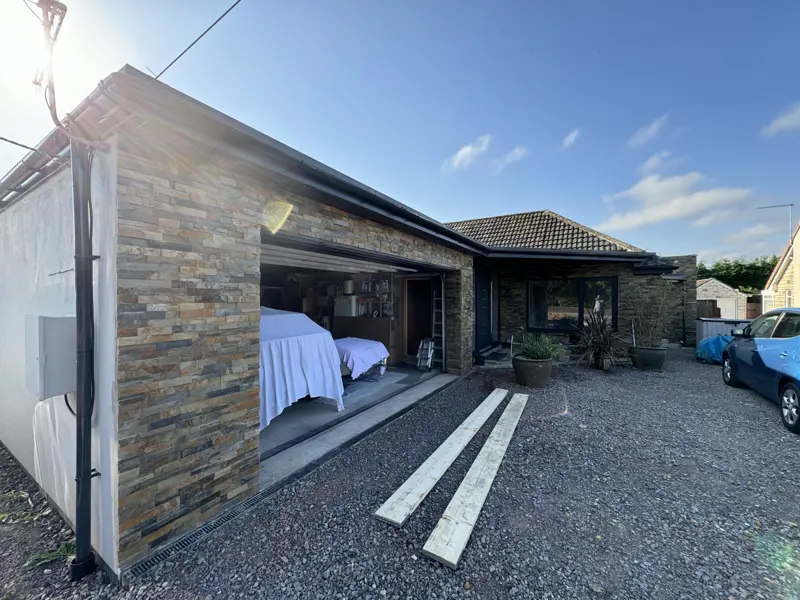
Angular gravel over a honeycomb stabilising grid, laid on a compacted sub-base and a weed membrane. The grid stops the stones rutting and spreading, so cars do not sink and the depth stays even. It is the cheapest new drive and fully permeable. A block paving apron at the road keeps stones off the pavement.
- Cheapest way to a new drive
- Fully permeable
- Grid stops rutting
- Block apron keeps gravel in
Why the part you cannot see matters most
A driveway fails from the bottom up. If the sub-base is too thin, or laid on soft ground without a membrane, the surface sinks where the car wheels sit and puddles form. On block paving, missing edge restraint lets the blocks creep apart.
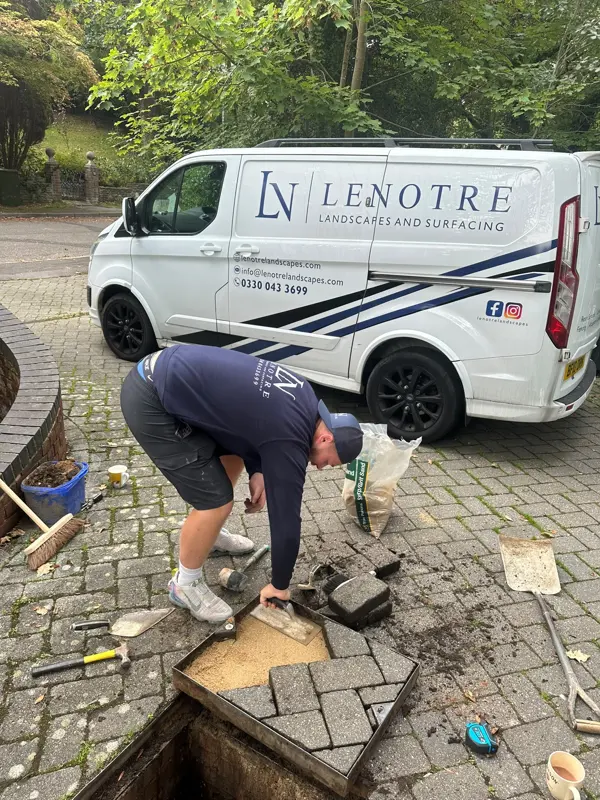
So we dig out to a depth that suits your ground, lay a geotextile membrane where the soil is soft or clay, then build the sub-base in layers and compact each one. Under a car driveway that is usually at least 150mm of Type 1. The edging is set in concrete before the surface goes down.
- Dig out depth set from the ground, written on the quote
- Membrane over soft or clay ground
- Sub-base compacted in layers, not in one go
- Edging set in concrete on every open side
- Falls checked so water runs away from the house
Driveways we have laid
How a new driveway goes in
Break out and dig
The old surface comes up and we dig out to depth. Spoil goes in grab lorries or skips, priced on the quote.
Base and edging
Membrane down, sub-base laid and compacted in layers, and edging or kerbs set in concrete.
Drainage
Channel drains or soakaways where the falls need them, so water stays off the house and off the road.
Surface and finish
Resin, blocks, tarmac or gravel laid and finished. We clean up, then walk the drive with you.
Questions we get asked
Straight answers to what people ask us at the site visit.
Which driveway surface is best?
Do I need planning permission for a new driveway?
Do I need a dropped kerb?
How deep do you dig for a driveway?
Can you lay a new driveway over my old one?
How much does a new driveway cost?
Get a price for your new driveway
We measure up, check the levels and the ground, and send you a written quote with every stage priced on its own line.