
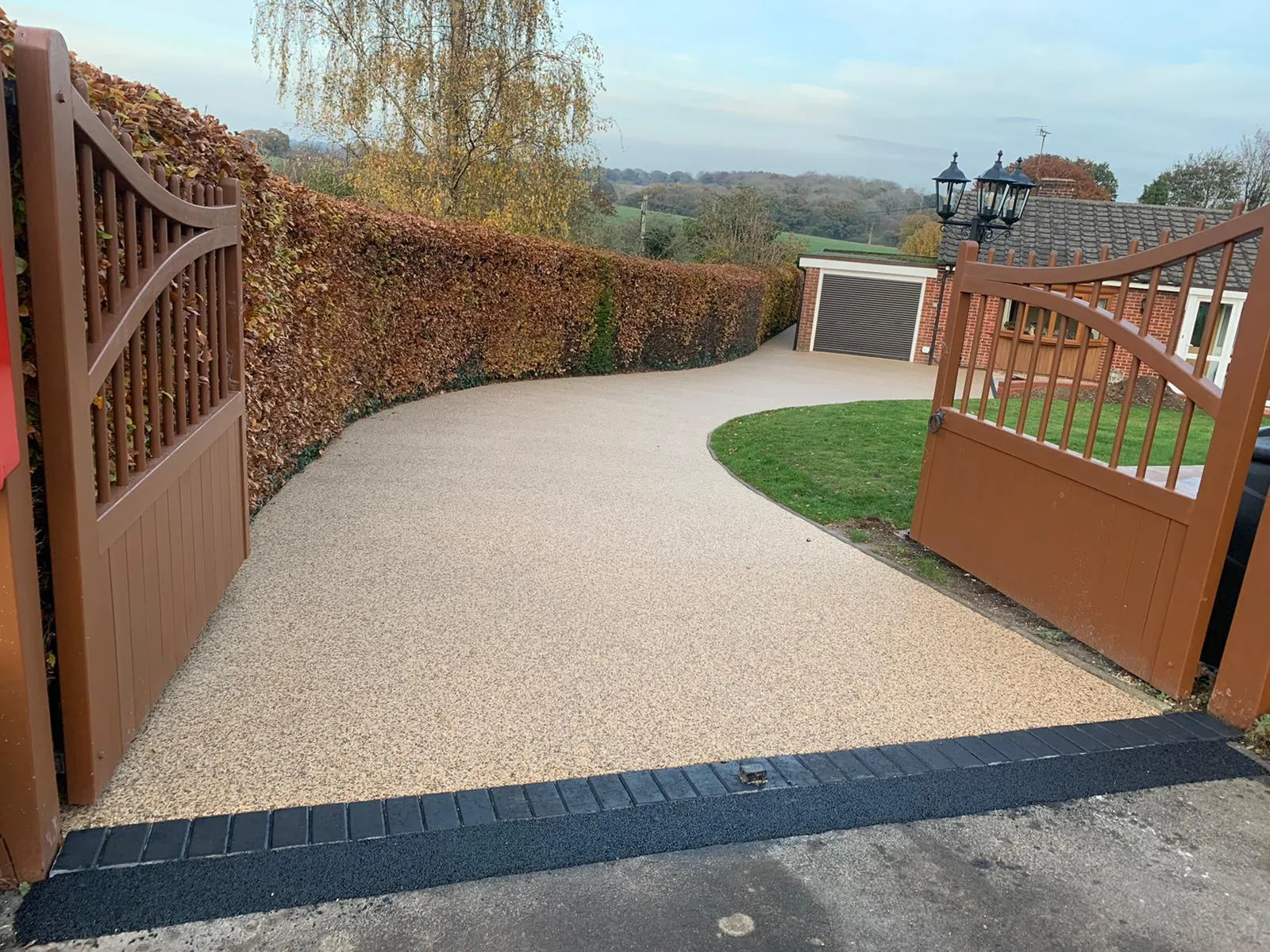
Do you need planning permission for a driveway?
In England, you do not need planning permission for a new driveway if it uses a permeable surface, or if rainwater runs off into a lawn or border on your own property. You do need it to cover more than 5 m² of a front garden with a surface that sends water onto the road.
The 5 m² front garden rule
Since 1 October 2008, paving over more than 5 square metres of a house's front garden counts as permitted development only if the surface is permeable, or the water is directed to a permeable area. The rule exists because hard, sealed surfaces send rain straight into street drains, which cannot always cope. The RHS estimates non-porous surfaces can increase rainwater run-off by as much as 50 percent.
So for a front drive over 5 m², you have two choices without planning permission:
- a permeable surface, such as resin bound on a porous base, permeable block paving, porous asphalt or gravel, or
- a traditional surface like standard block paving or tarmac, laid to fall into a lawn, border or soakaway on your property.
When the rule does not apply
Permitted development rights apply to houses. They do not cover:
- flats and maisonettes
- houses converted into flats
- houses where an Article 4 direction or a planning condition has removed permitted development rights, which is common in some conservation areas
Listed buildings need listed building consent for many changes. If any of these apply, check with your council before work starts. We will flag it at the site visit.
Dropped kerbs
If you will drive across the pavement to reach your drive, you need a dropped kerb. That is a separate application to your highways authority, with its own fee, and it is illegal to drive over a full-height kerb to reach your drive. Get it approved early, because it can take several weeks.
Walls, fences and gates
New walls, fences and gates next to a road used by vehicles can be up to 1 metre high without permission, and up to 2 metres elsewhere. Gate pillars and front walls often go in with a new drive, so check the heights before you plan them.
Where the rules come from
This guide summarises the Planning Portal guidance on paving your front garden and the government's guidance on permeable surfacing of front gardens. It applies to England. Your local council has the final say.
Planning permission questions
Do I need planning permission to pave my front garden?
Is resin bound permeable?
Is block paving permeable?
Do the rules apply to back gardens?
Do I need permission for a dropped kerb?
Planning a new drive?
We will check the rules for your house at the site visit and suggest a surface that keeps you within them.