
Porcelain and sandstone patios
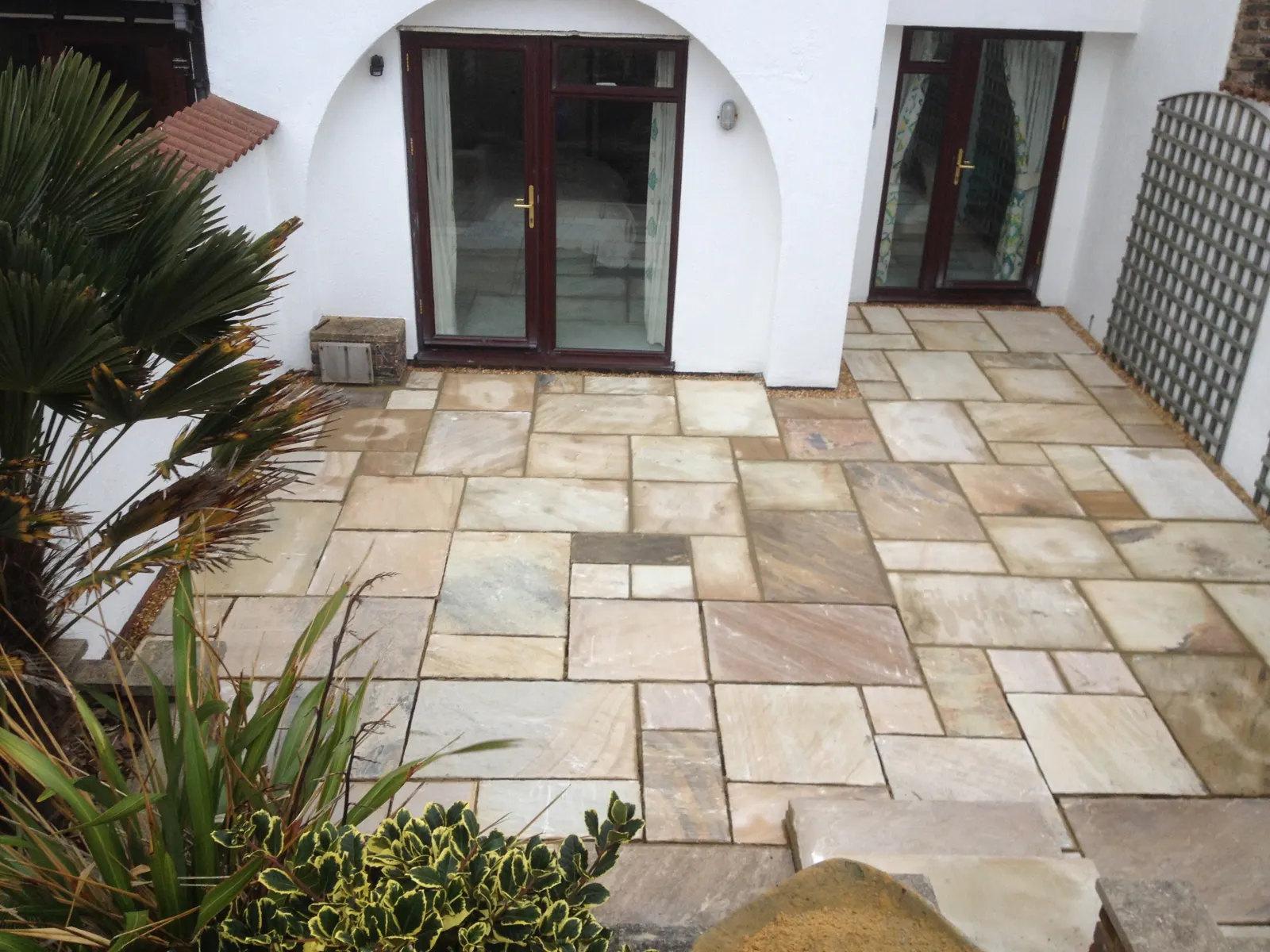
We lay new patios in 20mm outdoor porcelain, Indian sandstone and other natural stone, from a small terrace by the back door to a full tiered garden. Each slab goes down on a full mortar bed with a fall away from the house, so it does not rock and rain runs off.
- Full mortar bed, no dot and dab
- Falls away from the house
- Old patio taken up and removed
- Steps, walls and lighting too
- Free site visitMeasured and quoted in writing
- Fully insuredPublic liability cover on every job
- Itemised quotesEvery stage priced separately
- Bournemouth basedWorking across the south
 BeforeAfter
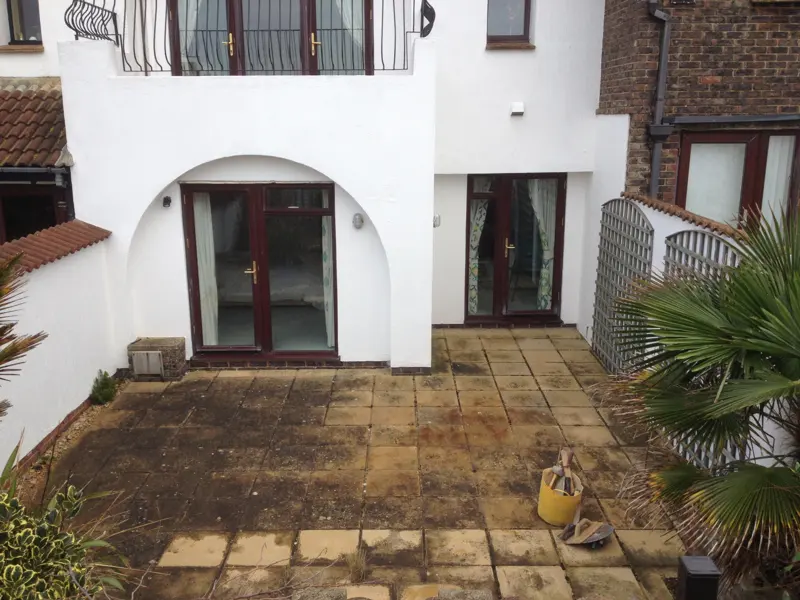
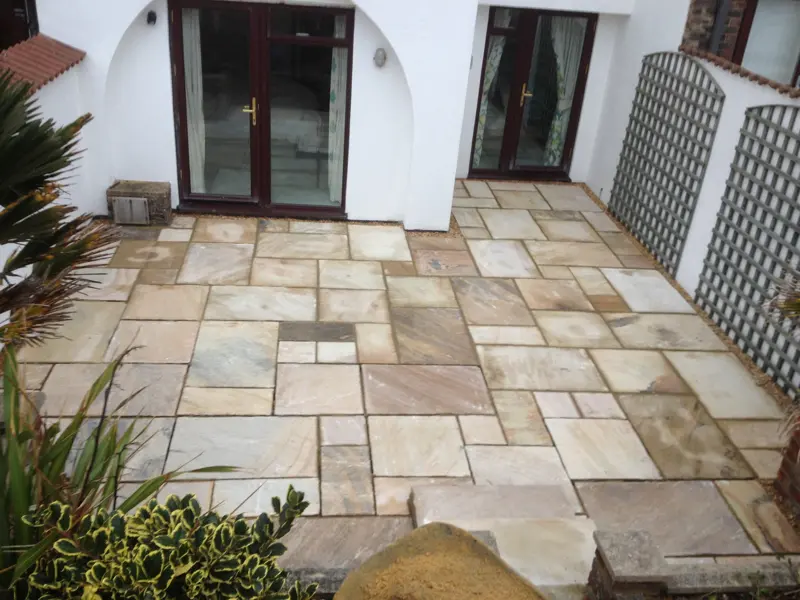
An old mossy patio relaid in sandstone
The old slabs outside these arched doors were stained, uneven and growing moss. We lifted them, dug out, laid a new sub-base and bedded multicolour Indian sandstone in a random pattern, then pointed the joints.
Drag the slider to compare.
Porcelain, sandstone or natural stone?
All three make a good patio. They differ on upkeep, price and how they age. We bring samples to the site visit so you can see them against your house.
Porcelain
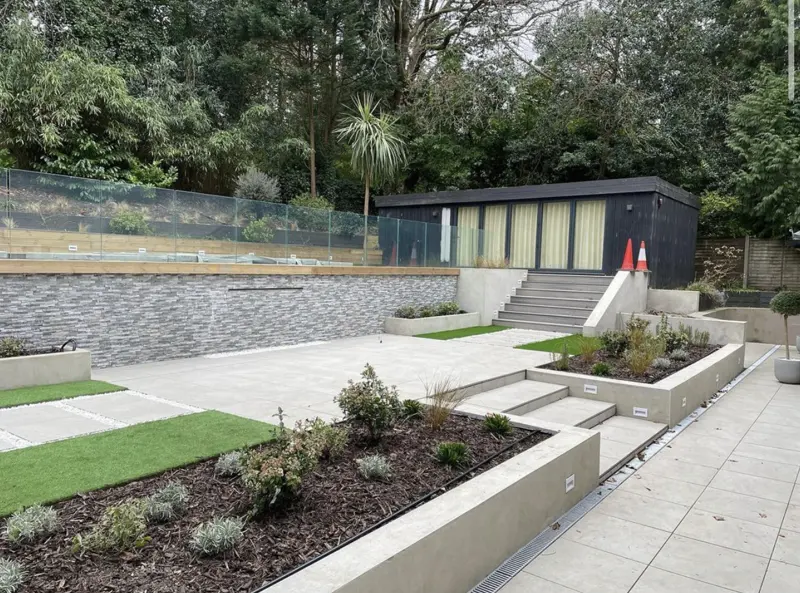
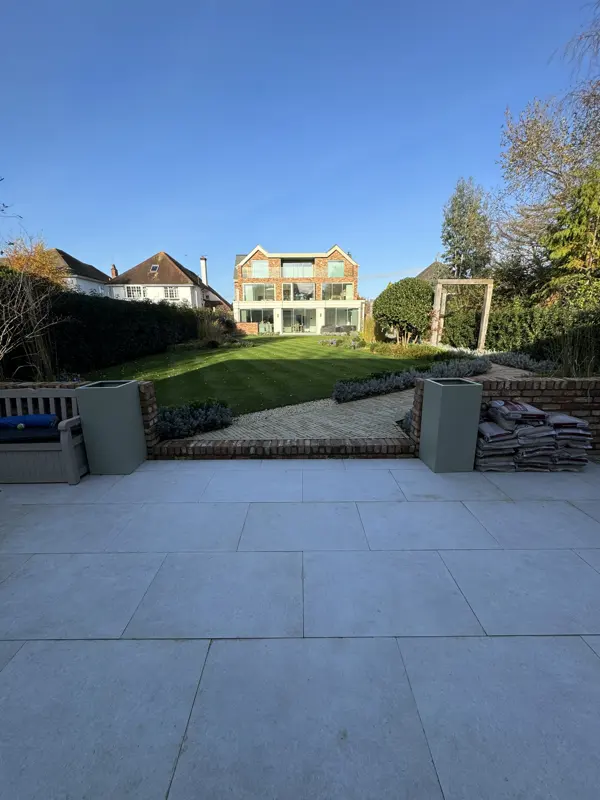
20mm outdoor porcelain in large formats like 600 x 600, 600 x 900 and 1200 x 600mm. It is not porous, so spilt wine, barbecue fat and wet leaves wipe off rather than soaking in. Finishes copy stone, timber and concrete, and the colour does not fade. It costs more to lay than sandstone because every cut is made with a diamond blade and each slab needs a bonding primer.
- Doesn't stain or grow moss easily
- Frost-proof, colour stays put
- Stone, wood and concrete looks
- Sweep and an occasional wash
Indian sandstone
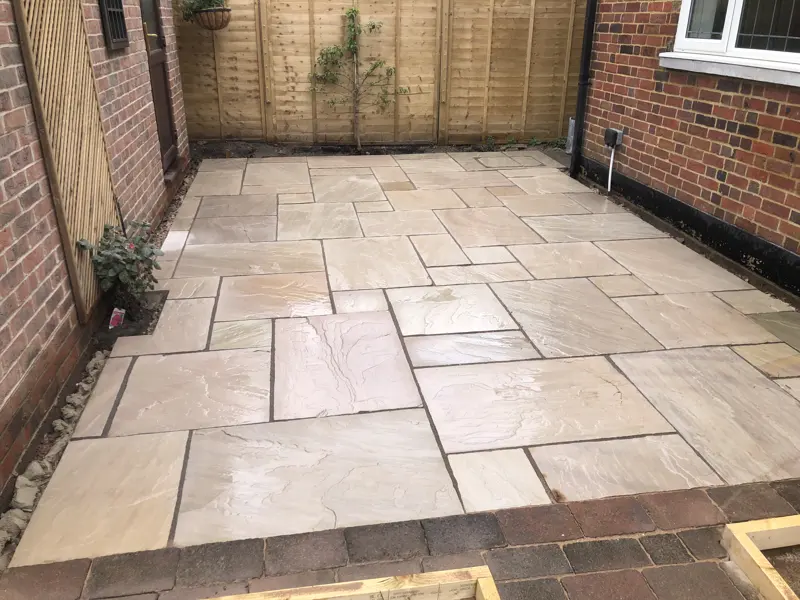
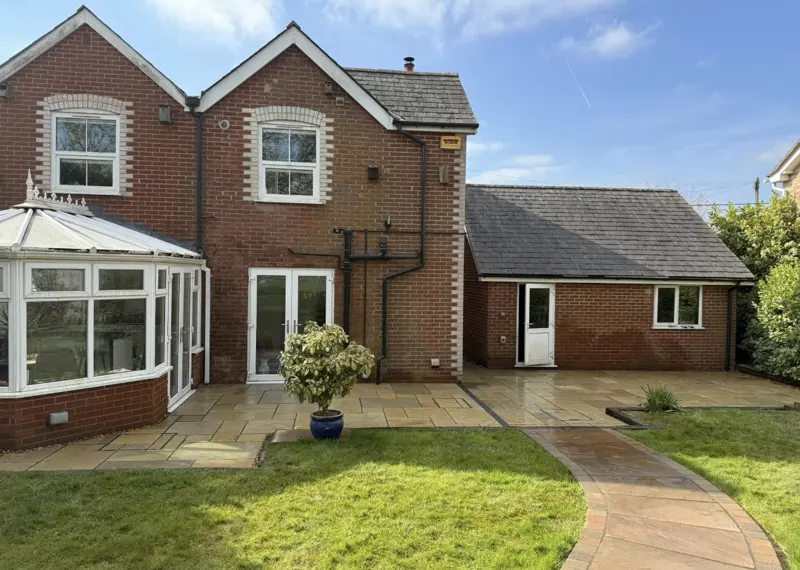
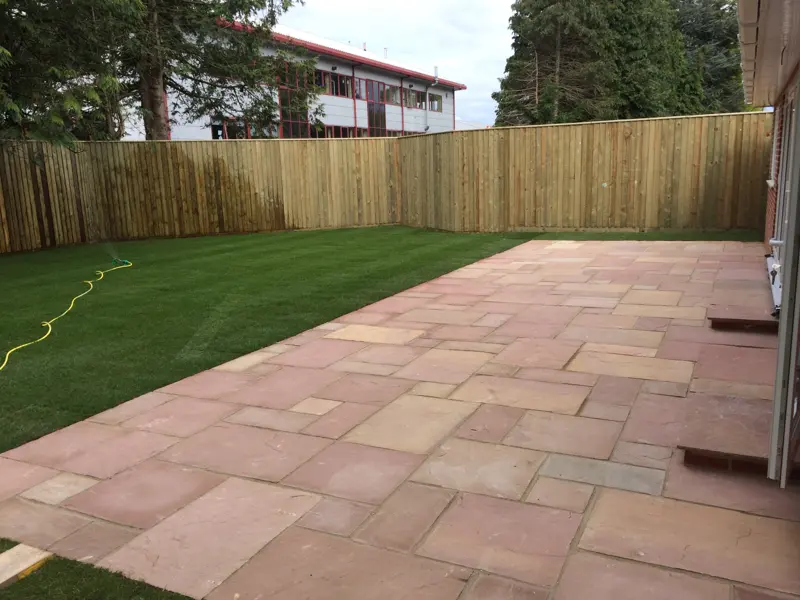
Riven natural stone in buff, fawn, multicolour and pink tones, usually laid in a random pattern of mixed sizes. No two slabs are the same, and it softens and weathers in over the years. It is the cheapest natural stone per m², which is why most of our patios are sandstone.
- Warm colours that mellow with age
- Every slab different
- Lower cost per m²
- Seal it and clean once a year
Grey sandstone and other natural stone
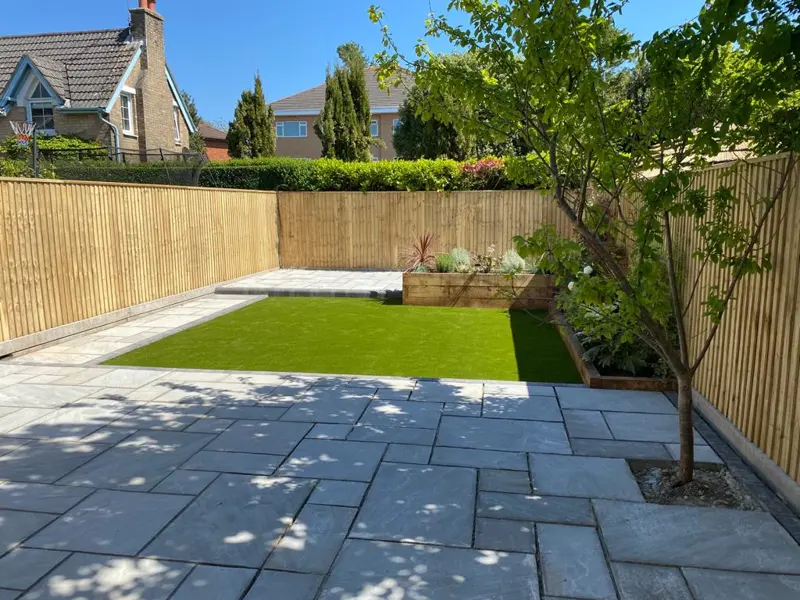
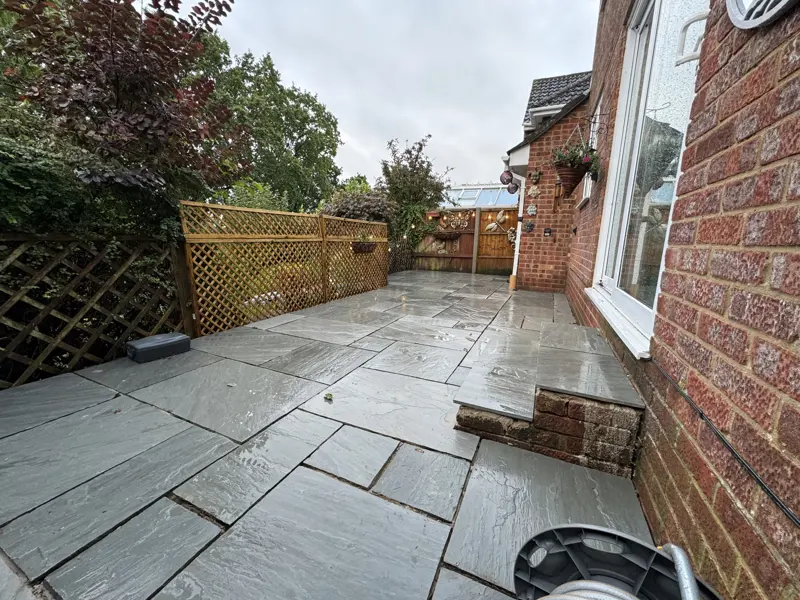
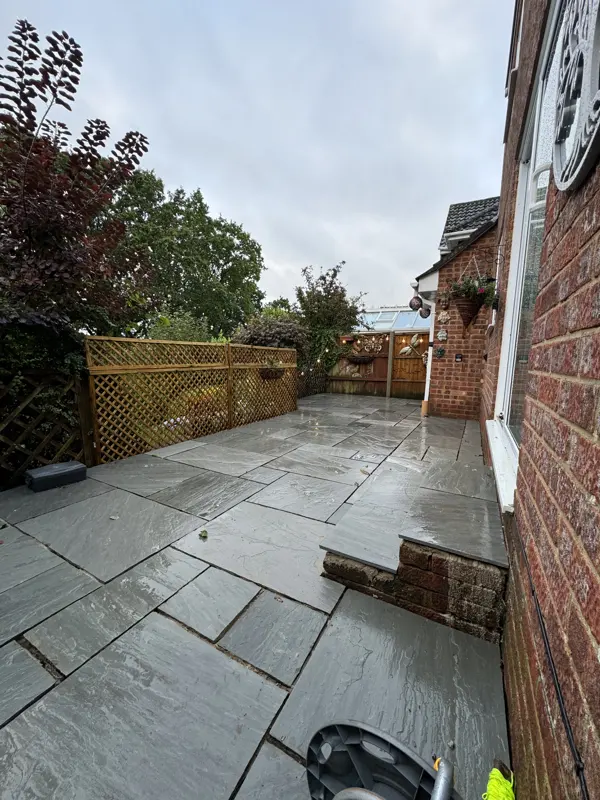
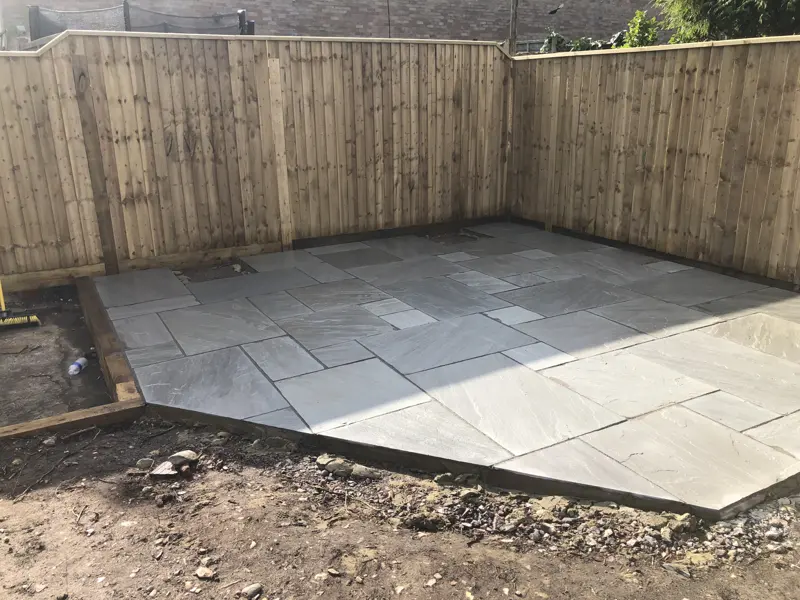
Grey sandstone, like the patios above, suits brick houses and modern render alike, and looks darker and richer when wet. We also lay limestone, slate, granite and York stone. They cost more per m² than sandstone, and they suit period houses where a patio needs to look as if it has always been there.
- Silver and grey riven sandstone
- Limestone, slate, granite, York stone
- Good for period and listed houses
- Heavier slabs, priced per stone
The same slabs can look completely different
The pattern changes the feel of a patio as much as the stone does. We'll lay a few slabs out dry at the visit if you can't decide.
Stack bond
A straight grid. Clean and modern, and the usual choice for large porcelain.
Stretcher bond
Rows offset by half a slab, like brickwork. It adds movement and hides small level changes.
Herringbone
Slabs set at right angles in a zigzag. Busy and traditional, best with smaller slabs or setts.
Random
Mixed slab sizes in no set order. The natural look for riven sandstone in a traditional garden.
Patios we have laid
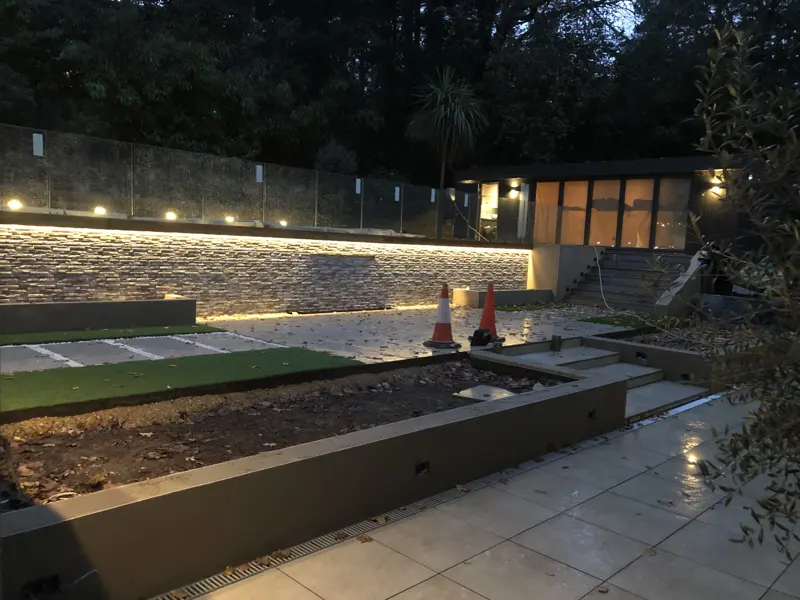
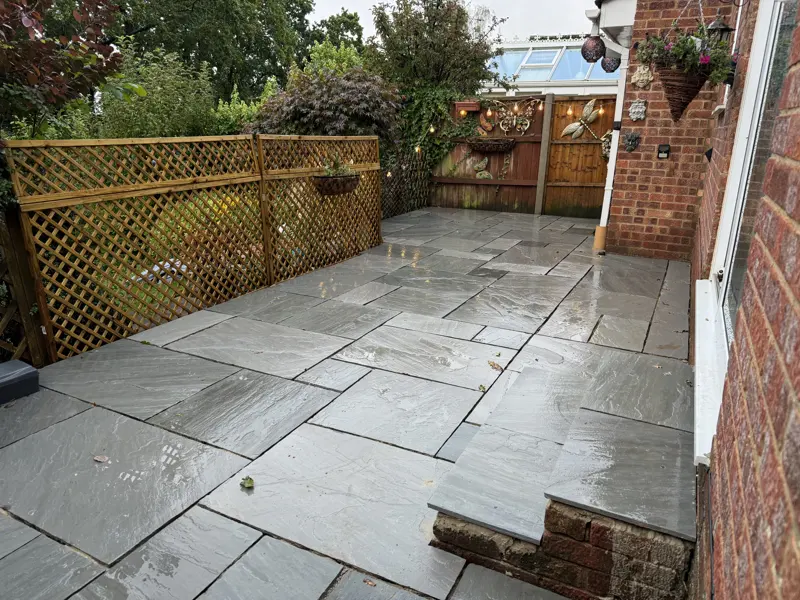
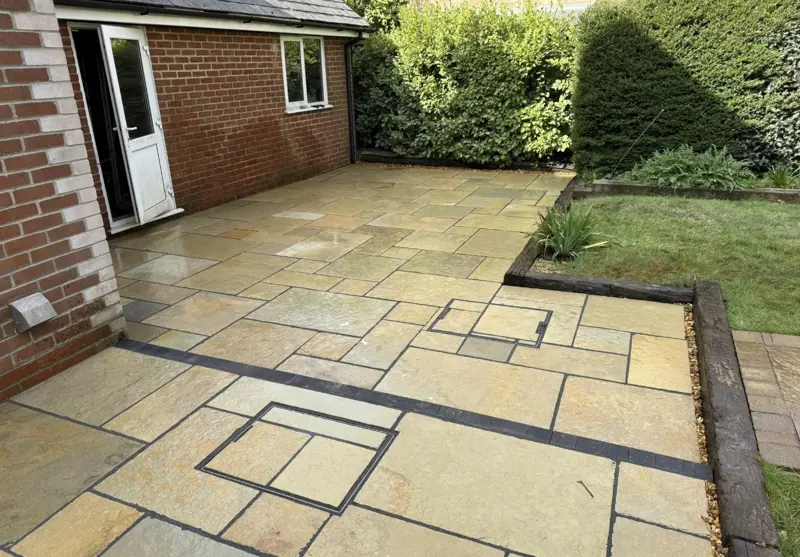
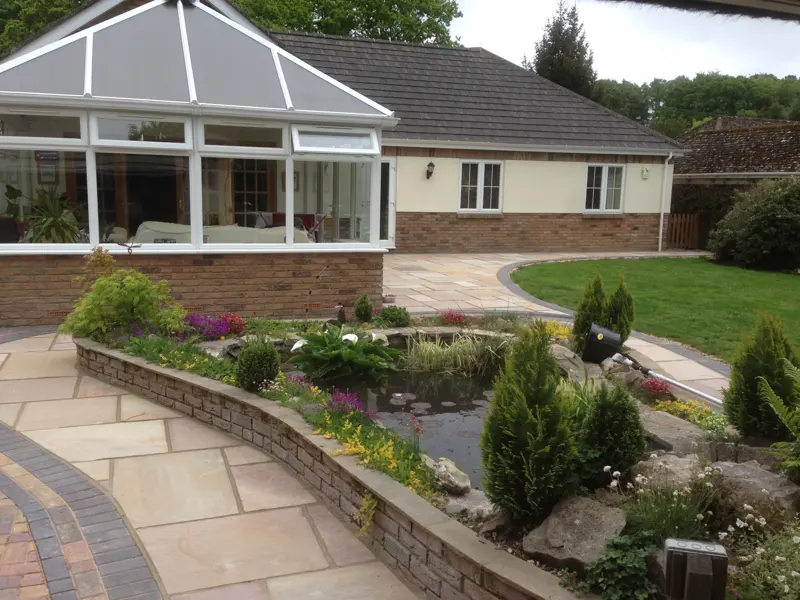
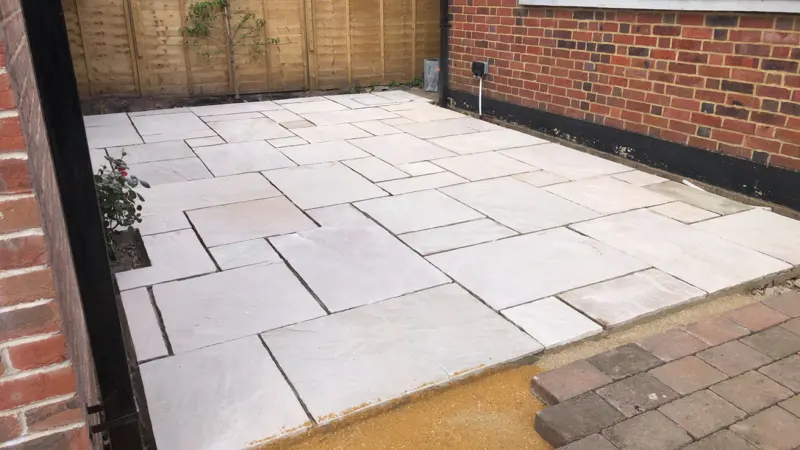
The steps behind a patio that stays flat
- Set the level. We keep the patio at least 150mm below the damp course and set a fall away from the house so water runs off.
- Dig out and sub-base. Topsoil and roots out, then at least 100mm of Type 1, compacted. The fall is about 1 in 60, enough to shed rain without you noticing the slope.
- Full mortar bed. Every slab bedded on a full bed of mortar, never on five dabs. Porcelain gets a bonding primer on the back.
- Joints. Porcelain joints are kept tight, 3 to 5mm. Once the bed has set, you choose how they're filled: a brush-in resin compound (quickest and weed-resistant), a cement slurry, or traditional mortar pointing.
- Edges. Open edges are haunched in concrete so the outer slabs can't creep or tip.
- Extras. Steps, raised beds, retaining walls, drainage channels and lighting are built in as we go rather than added after.
Want the patio as part of a bigger change? See garden landscaping, or add walls and steps.
Patio questions
How much does a new patio cost?
Porcelain or sandstone: which is better?
How thick should porcelain patio slabs be?
How long does it take to lay a patio?
Do patios need planning permission?
Can you lay a patio over an old one?
Get a price for a new patio
We bring slab samples, measure up and send you a written quote with the dig out, base, slabs and extras priced separately.