
Gravel driveways
Gravel is the most affordable way to a new driveway, and it suits cottages, farmhouses and long rural drives. We lay it over a dug-out sub-base and a stabilising grid, so it stays level and does not rut or end up on the lawn.
- Lowest cost per m²
- Permeable: no planning needed
- Grid stops rutting and spreading
- Edged so stone stays put
- Free site visitMeasured and quoted in writing
- Fully insuredPublic liability cover on every job
- Itemised quotesEvery stage priced separately
- Bournemouth basedWorking across the south
A gravel drive that stays where you put it
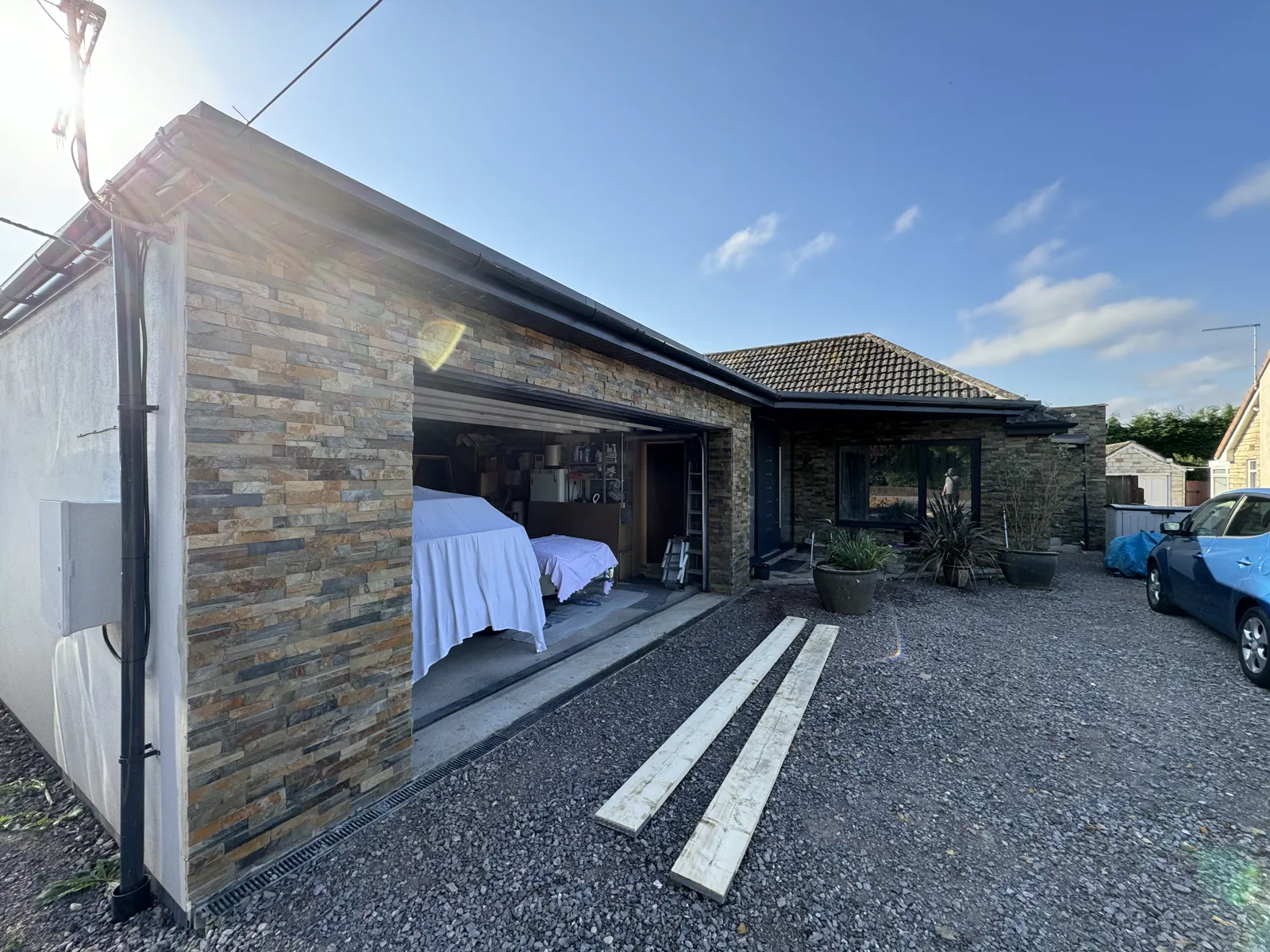
The photo above is a gravel courtyard beside a stone-clad extension, the closest finished gravel surface in our photos. A driveway uses the same stone, held in a grid on a dug-out base.
Most gravel drives that go wrong were laid straight onto soil, or with no edge. The stone sinks, the weeds come through and every car leaves two grooves. Ours are built in four layers:
- Dig out and sub-base. We dig down to firm ground and lay a compacted sub-base, the same as for a block paved drive.
- Membrane. A heavy-duty membrane stops the sub-base mixing with the soil and slows weeds.
- Stabilising grid. Honeycomb panels hold the gravel in cells so it cannot move under tyres.
- Edging and gravel. Timber, steel or block edging, then angular gravel filled to just over the top of the grid.
Choosing the stone
Angular gravel in the 14 to 20mm range is best for a driveway. Golden and buff flints suit Dorset brick and flint, slate and granite chippings suit modern houses. We bring samples to the site visit.
Gravel with block paving or resin
A good compromise is gravel for the main area with a block paving apron at the road, which stops stones being dragged onto the pavement. Or use resin bound for the same stone look with no loose stones at all.
Self-binding gravel
Self-binding gravel is a fine, sandy stone that packs down hard when it's rolled, like a country path. It doesn't scatter and it suits paths and quiet drives on period and rural properties. It needs a fall so water runs off the top, and it can go soft and muddy in a long wet spell, so on heavy use or a slope we'd suggest gridded gravel instead.
Gravel against the other driveway surfaces
Gravel wins on price and drainage. It loses on tidiness. Here's how it sits next to the others.
| Gravel on a grid | Resin bound | Block paving | Tarmac | |
|---|---|---|---|---|
| Cost per m² | Lowest | Mid to high | Mid to high | Low to mid |
| Drains through | Yes | Yes | Only permeable blocks | No, needs a drain |
| Loose stones | Some | None | None | None |
| Weeds | Membrane slows them | Very few | In the joints | Very few |
| Upkeep | Rake and top up | Jet wash | Re-sand joints | Sweep |
There's more on prices in our driveway cost guide.
Looking after a gravel drive
Rake it level every few weeks where the cars turn, and pick out leaves before they rot into the stone. Expect to top up a few bags every couple of years, because some stone always walks off on shoes and tyres. Weeds that seed on top pull out easily; the membrane stops the deep-rooted ones coming up from below.
Gravel crunches underfoot, which some people like as a security feature. If you want quiet and a surface you can wheel a bin or a pushchair over, resin bound is the better choice.
Gravel driveway questions
Is a gravel driveway the cheapest option?
Does a gravel driveway need planning permission?
Why use a gravel grid?
What size gravel is best for a driveway?
Price up a gravel driveway
Book a free site visit. We measure up, talk through materials and send you a written, itemised quote.